THE PASSAGE
2021
Joseph Clayton Mills
When I began to think about creating a public art installation for Illuminate Coral Gables, it was important to me to think about how my project would function in its specific location—in this case, the storefronts along Miracle Mile. It’s a high-end shopping district, but it’s also played an important role in shaping the city’s identity. As I learned more about its history, I saw how it has acted as a public forum—a place for celebrations and parades, like the annual Junior Orange Bowl parade, but also for political protests, shopping, working, and simply living side by side. Along Miracle Mile, the lives of people from Coral Gables and the surrounding communities intersect with one another.
I began to think, too, about how the glass windows of the storefronts reflect the images of the passersby. I wanted to draw attention to how the storefront windows frame that endless stream of people and trafficand act as a kind of mirror held up to the city. I also wanted to stress the ways in which the people of Coral Gables were part of a larger community, one that not only included the surrounding neighborhoods but also stretched into the past.
When I began to think about creating a public art installation for Illuminate Coral Gables, it was important to me to think about how my project would function in its specific location—in this case, the storefronts along Miracle Mile. It’s a high-end shopping district, but it’s also played an important role in shaping the city’s identity. As I learned more about its history, I saw how it has acted as a public forum—a place for celebrations and parades, like the annual Junior Orange Bowl parade, but also for political protests, shopping, working, and simply living side by side. Along Miracle Mile, the lives of people from Coral Gables and the surrounding communities intersect with one another.
I began to think, too, about how the glass windows of the storefronts reflect the images of the passersby. I wanted to draw attention to how the storefront windows frame that endless stream of people and trafficand act as a kind of mirror held up to the city. I also wanted to stress the ways in which the people of Coral Gables were part of a larger community, one that not only included the surrounding neighborhoods but also stretched into the past.
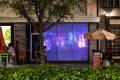
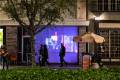
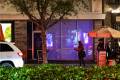
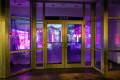
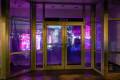
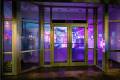
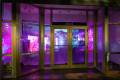
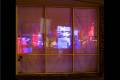
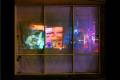
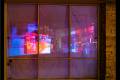
To do so, I decided to draw on and reconfigure archival film and video footage—particularly of Miracle Mile and Coral Gables, but also from other cities throughout South Florida—and use that as the basis for my project. In the final installation, with use of multiple video projectors and rotating motors, this archival footage will be refracted through a sculptural arrangement of two-way mirrors and translucent screens and projected across the storefronts along Miracle Mile. The life of the street and of the people who have inhabited it will be transformed into a kaleidoscope of ghostly, shifting images. The rotating projections will reflect off the glass windows of the storefronts and intermingle with the reflections of the passersby and the lights of the city, flowing past, among, and around one another.
With the help of local librarians, curators, and archivists, I started to research the history of Coral Gables and uncovered resources, such as the Florida Memory Project, the Digital Library of the Caribbean, and the archives at the HistoryMiami Research Center, Miami Dade College, and the University of Miami, that preserved and made available fascinating documents, photographs, and films. Drawing on those materials, I began carefully selecting, reconfiguring, and altering this found footage to construct a portrait of Coral Gables, one in which shoppers and office workers strolling along the sidewalks, the passing traffic, and the day-to-day life of the street could overlap with footage of parades, community celebrations, and political protests. Today, Coral Gables is increasingly diverse and polyglot, and it strives to be open and inviting to everyone, but as I researched, it also became clear to me that the city’s past was more complicated. To tell the full story of Coral Gables, I needed to include scenes from the history of other neighborhoods, including Liberty City, Little Haiti, and Overtown, and communities that had long been erased from the narrative, such as the Bahamian workers who were instrumental in the neighborhood’s construction. I wanted to be able to bring those stories into dialog with the history of the Miracle Mile.
I hope that these shifting and unstable traces of the city’s past will raise implicit questions of visibility, opacity, and refraction. Who is shown, and who is not? What is remembered and recorded, and what is forgotten? How does the community’s vision of itself evolve over time? Who is included, and who is excluded? Ultimately, my goal for The Passage is to highlight the dynamic relationship between the personal and the political, between the past and the present, and between the image or myth of Coral Gables and its actual, lived, and ongoing history.
THE PASSAGE
2021
Joseph Clayton Mills
When I began to think about creating a public art installation for Illuminate Coral Gables, it was important to me to think about how my project would function in its specific location—in this case, the storefronts along Miracle Mile. It’s a high-end shopping district, but it’s also played an important role in shaping the city’s identity. As I learned more about its history, I saw how it has acted as a public forum—a place for celebrations and parades, like the annual Junior Orange Bowl parade, but also for political protests, shopping, working, and simply living side by side. Along Miracle Mile, the lives of people from Coral Gables and the surrounding communities intersect with one another.
I began to think, too, about how the glass windows of the storefronts reflect the images of the passersby. I wanted to draw attention to how the storefront windows frame that endless stream of people and trafficand act as a kind of mirror held up to the city. I also wanted to stress the ways in which the people of Coral Gables were part of a larger community, one that not only included the surrounding neighborhoods but also stretched into the past.
When I began to think about creating a public art installation for Illuminate Coral Gables, it was important to me to think about how my project would function in its specific location—in this case, the storefronts along Miracle Mile. It’s a high-end shopping district, but it’s also played an important role in shaping the city’s identity. As I learned more about its history, I saw how it has acted as a public forum—a place for celebrations and parades, like the annual Junior Orange Bowl parade, but also for political protests, shopping, working, and simply living side by side. Along Miracle Mile, the lives of people from Coral Gables and the surrounding communities intersect with one another.
I began to think, too, about how the glass windows of the storefronts reflect the images of the passersby. I wanted to draw attention to how the storefront windows frame that endless stream of people and trafficand act as a kind of mirror held up to the city. I also wanted to stress the ways in which the people of Coral Gables were part of a larger community, one that not only included the surrounding neighborhoods but also stretched into the past.
To do so, I decided to draw on and reconfigure archival film and video footage—particularly of Miracle Mile and Coral Gables, but also from other cities throughout South Florida—and use that as the basis for my project. In the final installation, with use of multiple video projectors and rotating motors, this archival footage will be refracted through a sculptural arrangement of two-way mirrors and translucent screens and projected across the storefronts along Miracle Mile. The life of the street and of the people who have inhabited it will be transformed into a kaleidoscope of ghostly, shifting images. The rotating projections will reflect off the glass windows of the storefronts and intermingle with the reflections of the passersby and the lights of the city, flowing past, among, and around one another.
With the help of local librarians, curators, and archivists, I started to research the history of Coral Gables and uncovered resources, such as the Florida Memory Project, the Digital Library of the Caribbean, and the archives at the HistoryMiami Research Center, Miami Dade College, and the University of Miami, that preserved and made available fascinating documents, photographs, and films. Drawing on those materials, I began carefully selecting, reconfiguring, and altering this found footage to construct a portrait of Coral Gables, one in which shoppers and office workers strolling along the sidewalks, the passing traffic, and the day-to-day life of the street could overlap with footage of parades, community celebrations, and political protests. Today, Coral Gables is increasingly diverse and polyglot, and it strives to be open and inviting to everyone, but as I researched, it also became clear to me that the city’s past was more complicated. To tell the full story of Coral Gables, I needed to include scenes from the history of other neighborhoods, including Liberty City, Little Haiti, and Overtown, and communities that had long been erased from the narrative, such as the Bahamian workers who were instrumental in the neighborhood’s construction. I wanted to be able to bring those stories into dialog with the history of the Miracle Mile.
I hope that these shifting and unstable traces of the city’s past will raise implicit questions of visibility, opacity, and refraction. Who is shown, and who is not? What is remembered and recorded, and what is forgotten? How does the community’s vision of itself evolve over time? Who is included, and who is excluded? Ultimately, my goal for The Passage is to highlight the dynamic relationship between the personal and the political, between the past and the present, and between the image or myth of Coral Gables and its actual, lived, and ongoing history.
THE PASSAGE
2021
Joseph Clayton Mills
When I began to think about creating a public art installation for Illuminate Coral Gables, it was important to me to think about how my project would function in its specific location—in this case, the storefronts along Miracle Mile. It’s a high-end shopping district, but it’s also played an important role in shaping the city’s identity. As I learned more about its history, I saw how it has acted as a public forum—a place for celebrations and parades, like the annual Junior Orange Bowl parade, but also for political protests, shopping, working, and simply living side by side. Along Miracle Mile, the lives of people from Coral Gables and the surrounding communities intersect with one another.
I began to think, too, about how the glass windows of the storefronts reflect the images of the passersby. I wanted to draw attention to how the storefront windows frame that endless stream of people and trafficand act as a kind of mirror held up to the city. I also wanted to stress the ways in which the people of Coral Gables were part of a larger community, one that not only included the surrounding neighborhoods but also stretched into the past.
When I began to think about creating a public art installation for Illuminate Coral Gables, it was important to me to think about how my project would function in its specific location—in this case, the storefronts along Miracle Mile. It’s a high-end shopping district, but it’s also played an important role in shaping the city’s identity. As I learned more about its history, I saw how it has acted as a public forum—a place for celebrations and parades, like the annual Junior Orange Bowl parade, but also for political protests, shopping, working, and simply living side by side. Along Miracle Mile, the lives of people from Coral Gables and the surrounding communities intersect with one another.
I began to think, too, about how the glass windows of the storefronts reflect the images of the passersby. I wanted to draw attention to how the storefront windows frame that endless stream of people and trafficand act as a kind of mirror held up to the city. I also wanted to stress the ways in which the people of Coral Gables were part of a larger community, one that not only included the surrounding neighborhoods but also stretched into the past.
To do so, I decided to draw on and reconfigure archival film and video footage—particularly of Miracle Mile and Coral Gables, but also from other cities throughout South Florida—and use that as the basis for my project. In the final installation, with use of multiple video projectors and rotating motors, this archival footage will be refracted through a sculptural arrangement of two-way mirrors and translucent screens and projected across the storefronts along Miracle Mile. The life of the street and of the people who have inhabited it will be transformed into a kaleidoscope of ghostly, shifting images. The rotating projections will reflect off the glass windows of the storefronts and intermingle with the reflections of the passersby and the lights of the city, flowing past, among, and around one another.
With the help of local librarians, curators, and archivists, I started to research the history of Coral Gables and uncovered resources, such as the Florida Memory Project, the Digital Library of the Caribbean, and the archives at the HistoryMiami Research Center, Miami Dade College, and the University of Miami, that preserved and made available fascinating documents, photographs, and films. Drawing on those materials, I began carefully selecting, reconfiguring, and altering this found footage to construct a portrait of Coral Gables, one in which shoppers and office workers strolling along the sidewalks, the passing traffic, and the day-to-day life of the street could overlap with footage of parades, community celebrations, and political protests. Today, Coral Gables is increasingly diverse and polyglot, and it strives to be open and inviting to everyone, but as I researched, it also became clear to me that the city’s past was more complicated. To tell the full story of Coral Gables, I needed to include scenes from the history of other neighborhoods, including Liberty City, Little Haiti, and Overtown, and communities that had long been erased from the narrative, such as the Bahamian workers who were instrumental in the neighborhood’s construction. I wanted to be able to bring those stories into dialog with the history of the Miracle Mile.
I hope that these shifting and unstable traces of the city’s past will raise implicit questions of visibility, opacity, and refraction. Who is shown, and who is not? What is remembered and recorded, and what is forgotten? How does the community’s vision of itself evolve over time? Who is included, and who is excluded? Ultimately, my goal for The Passage is to highlight the dynamic relationship between the personal and the political, between the past and the present, and between the image or myth of Coral Gables and its actual, lived, and ongoing history.
THE PASSAGE
2021
Joseph Clayton Mills
When I began to think about creating a public art installation for Illuminate Coral Gables, it was important to me to think about how my project would function in its specific location—in this case, the storefronts along Miracle Mile. It’s a high-end shopping district, but it’s also played an important role in shaping the city’s identity. As I learned more about its history, I saw how it has acted as a public forum—a place for celebrations and parades, like the annual Junior Orange Bowl parade, but also for political protests, shopping, working, and simply living side by side. Along Miracle Mile, the lives of people from Coral Gables and the surrounding communities intersect with one another.
I began to think, too, about how the glass windows of the storefronts reflect the images of the passersby. I wanted to draw attention to how the storefront windows frame that endless stream of people and trafficand act as a kind of mirror held up to the city. I also wanted to stress the ways in which the people of Coral Gables were part of a larger community, one that not only included the surrounding neighborhoods but also stretched into the past.
When I began to think about creating a public art installation for Illuminate Coral Gables, it was important to me to think about how my project would function in its specific location—in this case, the storefronts along Miracle Mile. It’s a high-end shopping district, but it’s also played an important role in shaping the city’s identity. As I learned more about its history, I saw how it has acted as a public forum—a place for celebrations and parades, like the annual Junior Orange Bowl parade, but also for political protests, shopping, working, and simply living side by side. Along Miracle Mile, the lives of people from Coral Gables and the surrounding communities intersect with one another.
I began to think, too, about how the glass windows of the storefronts reflect the images of the passersby. I wanted to draw attention to how the storefront windows frame that endless stream of people and trafficand act as a kind of mirror held up to the city. I also wanted to stress the ways in which the people of Coral Gables were part of a larger community, one that not only included the surrounding neighborhoods but also stretched into the past.
To do so, I decided to draw on and reconfigure archival film and video footage—particularly of Miracle Mile and Coral Gables, but also from other cities throughout South Florida—and use that as the basis for my project. In the final installation, with use of multiple video projectors and rotating motors, this archival footage will be refracted through a sculptural arrangement of two-way mirrors and translucent screens and projected across the storefronts along Miracle Mile. The life of the street and of the people who have inhabited it will be transformed into a kaleidoscope of ghostly, shifting images. The rotating projections will reflect off the glass windows of the storefronts and intermingle with the reflections of the passersby and the lights of the city, flowing past, among, and around one another.
With the help of local librarians, curators, and archivists, I started to research the history of Coral Gables and uncovered resources, such as the Florida Memory Project, the Digital Library of the Caribbean, and the archives at the HistoryMiami Research Center, Miami Dade College, and the University of Miami, that preserved and made available fascinating documents, photographs, and films. Drawing on those materials, I began carefully selecting, reconfiguring, and altering this found footage to construct a portrait of Coral Gables, one in which shoppers and office workers strolling along the sidewalks, the passing traffic, and the day-to-day life of the street could overlap with footage of parades, community celebrations, and political protests. Today, Coral Gables is increasingly diverse and polyglot, and it strives to be open and inviting to everyone, but as I researched, it also became clear to me that the city’s past was more complicated. To tell the full story of Coral Gables, I needed to include scenes from the history of other neighborhoods, including Liberty City, Little Haiti, and Overtown, and communities that had long been erased from the narrative, such as the Bahamian workers who were instrumental in the neighborhood’s construction. I wanted to be able to bring those stories into dialog with the history of the Miracle Mile.
I hope that these shifting and unstable traces of the city’s past will raise implicit questions of visibility, opacity, and refraction. Who is shown, and who is not? What is remembered and recorded, and what is forgotten? How does the community’s vision of itself evolve over time? Who is included, and who is excluded? Ultimately, my goal for The Passage is to highlight the dynamic relationship between the personal and the political, between the past and the present, and between the image or myth of Coral Gables and its actual, lived, and ongoing history.
ARTWORK
ARTWORK
ARTWORK