LULLABY
2026
Nasim Moghadam
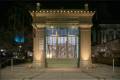
In Lullaby (Lalaee/لالایی), Nasim Moghadam presents a monumental, room-scale sculptural installation that confronts the inherited violence of political imprisonment and the gendered control of women’s bodies. Inspired by the thousands of children born and raised in prisons due to their mothers’ and in some cases both parents’ detention as political activists, the work reflects on motherhood under surveillance, resistance forged through care, and the cost of breaking silence.
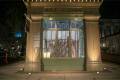
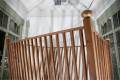
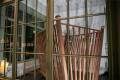
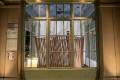
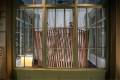
The installation takes the form of an oversized wooden cradle whose structure echoes the visual language of prison bars. This formal resemblance collapses the boundary between protection and confinement: elements meant to safeguard a child become visually indistinguishable from the bars that restrict freedom. Through this convergence, Moghadam reveals how systems of power regulate women’s bodies precisely because of their capacity to nurture, resist, and generate change.
In Lullaby (Lalaee/لالایی), Nasim Moghadam presents a monumental, room-scale sculptural installation that confronts the inherited violence of political imprisonment and the gendered control of women’s bodies. Inspired by the thousands of children born and raised in prisons due to their mothers’ and in some cases both parents’ detention as political activists, the work reflects on motherhood under surveillance, resistance forged through care, and the cost of breaking silence.
The installation takes the form of an oversized wooden cradle whose structure echoes the visual language of prison bars. This formal resemblance collapses the boundary between protection and confinement: elements meant to safeguard a child become visually indistinguishable from the bars that restrict freedom. Through this convergence, Moghadam reveals how systems of power regulate women’s bodies precisely because of their capacity to nurture, resist, and generate change.
Grounded within the room, the cradle rocks slowly from side to side, its monumental scale transforming a familiar gesture of care into one of unease. The motion generates a deep, resonant sound, both rhythmic and unsettling, shifting the act of rocking from comfort to tension. This movement is accompanied by a sound piece composed of twenty folkloric lullabies, filling the space with voices that soothe even as they mourn. The lullaby emerges as a quiet form of defiance, carrying love, fear, and endurance across generations born into confinement.
Through scale, sound, and restrained motion, Lullaby (Lalaee/لالایی) portrays childhood not as innocence untouched by politics, but as something shaped from birth by systems of control. Moghadam’s work honors imprisoned mothers worldwide who risk their freedom in defense of unalienable rights, while bearing witness to the children whose earliest memories are formed within walls of silence.
LULLABY
2026
Nasim Moghadam
In Lullaby (Lalaee/لالایی), Nasim Moghadam presents a monumental, room-scale sculptural installation that confronts the inherited violence of political imprisonment and the gendered control of women’s bodies. Inspired by the thousands of children born and raised in prisons due to their mothers’ and in some cases both parents’ detention as political activists, the work reflects on motherhood under surveillance, resistance forged through care, and the cost of breaking silence.
The installation takes the form of an oversized wooden cradle whose structure echoes the visual language of prison bars. This formal resemblance collapses the boundary between protection and confinement: elements meant to safeguard a child become visually indistinguishable from the bars that restrict freedom. Through this convergence, Moghadam reveals how systems of power regulate women’s bodies precisely because of their capacity to nurture, resist, and generate change.
In Lullaby (Lalaee/لالایی), Nasim Moghadam presents a monumental, room-scale sculptural installation that confronts the inherited violence of political imprisonment and the gendered control of women’s bodies. Inspired by the thousands of children born and raised in prisons due to their mothers’ and in some cases both parents’ detention as political activists, the work reflects on motherhood under surveillance, resistance forged through care, and the cost of breaking silence.
The installation takes the form of an oversized wooden cradle whose structure echoes the visual language of prison bars. This formal resemblance collapses the boundary between protection and confinement: elements meant to safeguard a child become visually indistinguishable from the bars that restrict freedom. Through this convergence, Moghadam reveals how systems of power regulate women’s bodies precisely because of their capacity to nurture, resist, and generate change.
Grounded within the room, the cradle rocks slowly from side to side, its monumental scale transforming a familiar gesture of care into one of unease. The motion generates a deep, resonant sound, both rhythmic and unsettling, shifting the act of rocking from comfort to tension. This movement is accompanied by a sound piece composed of twenty folkloric lullabies, filling the space with voices that soothe even as they mourn. The lullaby emerges as a quiet form of defiance, carrying love, fear, and endurance across generations born into confinement.
Through scale, sound, and restrained motion, Lullaby (Lalaee/لالایی) portrays childhood not as innocence untouched by politics, but as something shaped from birth by systems of control. Moghadam’s work honors imprisoned mothers worldwide who risk their freedom in defense of unalienable rights, while bearing witness to the children whose earliest memories are formed within walls of silence.
LULLABY
2026
Nasim Moghadam
In Lullaby (Lalaee/لالایی), Nasim Moghadam presents a monumental, room-scale sculptural installation that confronts the inherited violence of political imprisonment and the gendered control of women’s bodies. Inspired by the thousands of children born and raised in prisons due to their mothers’ and in some cases both parents’ detention as political activists, the work reflects on motherhood under surveillance, resistance forged through care, and the cost of breaking silence.
The installation takes the form of an oversized wooden cradle whose structure echoes the visual language of prison bars. This formal resemblance collapses the boundary between protection and confinement: elements meant to safeguard a child become visually indistinguishable from the bars that restrict freedom. Through this convergence, Moghadam reveals how systems of power regulate women’s bodies precisely because of their capacity to nurture, resist, and generate change.
In Lullaby (Lalaee/لالایی), Nasim Moghadam presents a monumental, room-scale sculptural installation that confronts the inherited violence of political imprisonment and the gendered control of women’s bodies. Inspired by the thousands of children born and raised in prisons due to their mothers’ and in some cases both parents’ detention as political activists, the work reflects on motherhood under surveillance, resistance forged through care, and the cost of breaking silence.
The installation takes the form of an oversized wooden cradle whose structure echoes the visual language of prison bars. This formal resemblance collapses the boundary between protection and confinement: elements meant to safeguard a child become visually indistinguishable from the bars that restrict freedom. Through this convergence, Moghadam reveals how systems of power regulate women’s bodies precisely because of their capacity to nurture, resist, and generate change.
Grounded within the room, the cradle rocks slowly from side to side, its monumental scale transforming a familiar gesture of care into one of unease. The motion generates a deep, resonant sound, both rhythmic and unsettling, shifting the act of rocking from comfort to tension. This movement is accompanied by a sound piece composed of twenty folkloric lullabies, filling the space with voices that soothe even as they mourn. The lullaby emerges as a quiet form of defiance, carrying love, fear, and endurance across generations born into confinement.
Through scale, sound, and restrained motion, Lullaby (Lalaee/لالایی) portrays childhood not as innocence untouched by politics, but as something shaped from birth by systems of control. Moghadam’s work honors imprisoned mothers worldwide who risk their freedom in defense of unalienable rights, while bearing witness to the children whose earliest memories are formed within walls of silence.
LULLABY
2026
Nasim Moghadam
In Lullaby (Lalaee/لالایی), Nasim Moghadam presents a monumental, room-scale sculptural installation that confronts the inherited violence of political imprisonment and the gendered control of women’s bodies. Inspired by the thousands of children born and raised in prisons due to their mothers’ and in some cases both parents’ detention as political activists, the work reflects on motherhood under surveillance, resistance forged through care, and the cost of breaking silence.
The installation takes the form of an oversized wooden cradle whose structure echoes the visual language of prison bars. This formal resemblance collapses the boundary between protection and confinement: elements meant to safeguard a child become visually indistinguishable from the bars that restrict freedom. Through this convergence, Moghadam reveals how systems of power regulate women’s bodies precisely because of their capacity to nurture, resist, and generate change.
In Lullaby (Lalaee/لالایی), Nasim Moghadam presents a monumental, room-scale sculptural installation that confronts the inherited violence of political imprisonment and the gendered control of women’s bodies. Inspired by the thousands of children born and raised in prisons due to their mothers’ and in some cases both parents’ detention as political activists, the work reflects on motherhood under surveillance, resistance forged through care, and the cost of breaking silence.
The installation takes the form of an oversized wooden cradle whose structure echoes the visual language of prison bars. This formal resemblance collapses the boundary between protection and confinement: elements meant to safeguard a child become visually indistinguishable from the bars that restrict freedom. Through this convergence, Moghadam reveals how systems of power regulate women’s bodies precisely because of their capacity to nurture, resist, and generate change.
Grounded within the room, the cradle rocks slowly from side to side, its monumental scale transforming a familiar gesture of care into one of unease. The motion generates a deep, resonant sound, both rhythmic and unsettling, shifting the act of rocking from comfort to tension. This movement is accompanied by a sound piece composed of twenty folkloric lullabies, filling the space with voices that soothe even as they mourn. The lullaby emerges as a quiet form of defiance, carrying love, fear, and endurance across generations born into confinement.
Through scale, sound, and restrained motion, Lullaby (Lalaee/لالایی) portrays childhood not as innocence untouched by politics, but as something shaped from birth by systems of control. Moghadam’s work honors imprisoned mothers worldwide who risk their freedom in defense of unalienable rights, while bearing witness to the children whose earliest memories are formed within walls of silence.
ARTWORK
ARTWORK
ARTWORK