LEBBEUS WOODS
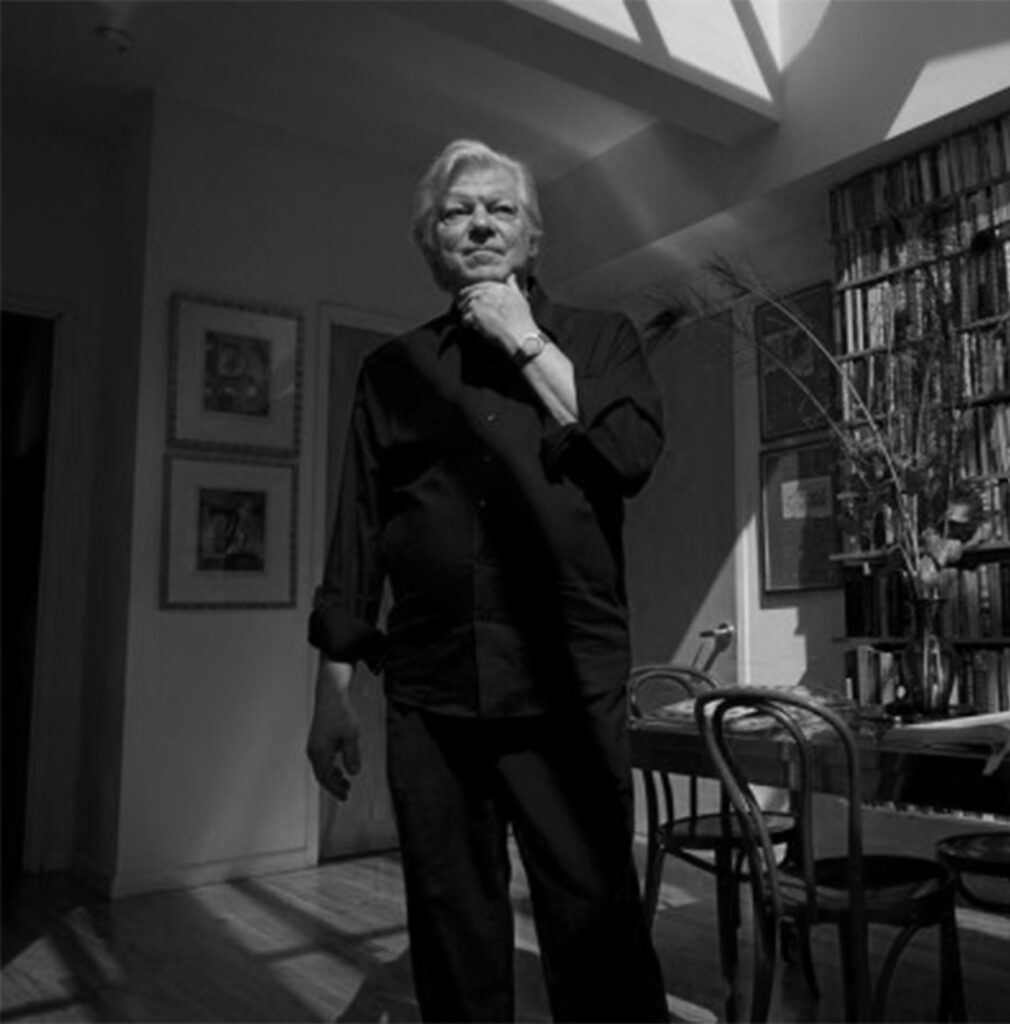
Lebbeus Woods (1940–2012) was an American architect and artist known for his radical, visionary designs that challenged the traditional boundaries of the built environment. After studying at the University of Illinois and Purdue University, he worked briefly for Eero Saarinen’s firm before dedicating his career to independent, conceptual projects. Woods rarely sought to see his designs constructed in the literal sense; instead, he used intricate, masterfully executed drawings and models to explore architecture as a response to social, political, and physical crises. His work is often associated with "experimental architecture," focusing on how structures might inhabit spaces of conflict, such as war zones or seismic fault lines.
A central theme in Woods' practice was the concept of "freespace," which proposed architectural interventions that lacked a predetermined purpose, allowing users to define the space through their own actions. His most influential projects, such as Berlin Free Zone and Lebbeus Woods: Light Pavilion, imagined a world where architecture was fluid and transformative rather than static. Following the Bosnian War, his proposals for the reconstruction of Sarajevo—which included "scabs" or architectural grafts intended to heal damaged buildings while preserving the memory of the conflict—gained international attention for their philosophical depth.
Though he completed very few built works, Woods' influence on the fields of...
Lebbeus Woods (1940–2012) was an American architect and artist known for his radical, visionary designs that challenged the traditional boundaries of the built environment. After studying at the University of Illinois and Purdue University, he worked briefly for Eero Saarinen’s firm before dedicating his career to independent, conceptual projects. Woods rarely sought to see his designs constructed in the literal sense; instead, he used intricate, masterfully executed drawings and models to explore architecture as a response to social, political, and physical crises. His work is often associated with "experimental architecture," focusing on how structures might inhabit spaces of conflict, such as war zones or seismic fault lines.
A central theme in Woods' practice was the concept of "freespace," which proposed architectural interventions that lacked a predetermined purpose, allowing users to define the space through their own actions. His most influential projects, such as Berlin Free Zone and Lebbeus Woods: Light Pavilion, imagined a world where architecture was fluid and transformative rather than static. Following the Bosnian War, his proposals for the reconstruction of Sarajevo—which included "scabs" or architectural grafts intended to heal damaged buildings while preserving the memory of the conflict—gained international attention for their philosophical depth.
Though he completed very few built works, Woods' influence on the fields of architecture, cinema, and digital design was profound. He was a long-time professor at The Cooper Union, where he mentored generations of architects to think beyond the utilitarian constraints of the profession. His aesthetic, characterized by jagged geometries and complex mechanical systems, has been cited as a primary inspiration for the visual world of science fiction films like Alien 3 and 12 Monkeys. Today, his drawings are held in the permanent collections of major institutions, including the Museum of Modern Art (MoMA) and the Getty Research Institute, cementing his legacy as one of the most significant architectural theorists of the late 20th century.
LEBBEUS WOODS
Lebbeus Woods (1940–2012) was an American architect and artist known for his radical, visionary designs that challenged the traditional boundaries of the built environment. After studying at the University of Illinois and Purdue...
Lebbeus Woods (1940–2012) was an American architect and artist known for his radical, visionary designs that challenged the traditional boundaries of the built environment. After studying at the University of Illinois and Purdue University, he worked briefly for Eero Saarinen’s firm before dedicating his career to independent, conceptual projects. Woods rarely sought to see his designs constructed in the literal sense; instead, he used intricate, masterfully executed drawings and models to explore architecture as a response to social, political, and physical crises. His work is often associated with "experimental architecture," focusing on how structures might inhabit spaces of conflict, such as war zones or seismic fault lines.
A central theme in Woods' practice was the concept of "freespace," which proposed architectural interventions that lacked a predetermined purpose, allowing users to define the space through their own actions. His most influential projects, such as Berlin Free Zone and Lebbeus Woods: Light Pavilion, imagined a world where architecture was fluid and transformative rather than static. Following the Bosnian War, his proposals for the reconstruction of Sarajevo—which included "scabs" or architectural grafts intended to heal damaged buildings while preserving the memory of the conflict—gained international attention for their philosophical depth.
Though he completed very few built works, Woods' influence on the fields of architecture, cinema, and digital design was profound. He was a long-time professor at The Cooper Union, where he mentored generations of architects to think beyond the utilitarian constraints of the profession. His aesthetic, characterized by jagged geometries and complex mechanical systems, has been cited as a primary inspiration for the visual world of science fiction films like Alien 3 and 12 Monkeys. Today, his drawings are held in the permanent collections of major institutions, including the Museum of Modern Art (MoMA) and the Getty Research Institute, cementing his legacy as one of the most significant architectural theorists of the late 20th century.
LEBBEUS WOODS
Lebbeus Woods (1940–2012) was an American architect and artist known for his radical, visionary designs that challenged the traditional boundaries of the built environment. After studying at the University of Illinois and Purdue University, he worked briefly for Eero Saarinen’s firm before dedicating his career to independent, conceptual projects. Woods rarely sought to see his designs constructed in the literal sense; instead, he used intricate, masterfully executed drawings and models to explore architecture as a response to social, political, and physical crises. His work is often associated with “experimental architecture,” focusing on how structures might inhabit spaces of conflict, such as war zones or seismic fault lines.
A central theme in Woods’ practice was the concept of “freespace,” which proposed architectural interventions that lacked a predetermined purpose, allowing users to define the space through their own actions. His most influential projects, such as Berlin Free Zone and Lebbeus Woods: Light Pavilion, imagined a world where architecture was fluid and transformative rather than static. Following the Bosnian War, his proposals for the reconstruction of Sarajevo—which included “scabs” or architectural grafts intended to heal damaged buildings while preserving the memory of the conflict—gained international attention for their philosophical depth.
Though he completed very few built works, Woods’ influence on the fields of architecture, cinema, and digital design was profound. He was a long-time professor at The Cooper Union, where he mentored generations of architects to think beyond the utilitarian constraints of the profession. His aesthetic, characterized by jagged geometries and complex mechanical systems, has been cited as a primary inspiration for the visual world of science fiction films like Alien 3 and 12 Monkeys. Today, his drawings are held in the permanent collections of major institutions, including the Museum of Modern Art (MoMA) and the Getty Research Institute, cementing his legacy as one of the most significant architectural theorists of the late 20th century.
ARTWORK
ARTWORK
ARTWORK