ARAHMAIANI FEISAL
Born in Bandung, Western Java, Indonesia, Arahmaiani Feisal is internationally known for her performance art, installations, videos and paintings. This extremely active artist is also a poet, essayist, speaker, teacher and community organiser. She obtained her BFA in Fine Arts at the Bandung Institute of Technology in 1983, with subsequent studies at the Paddington Art School, Sydney, Australia (1985–1986) and the Academie voor Beeldende Kunst, Enschede, Netherlands (1991–1992).
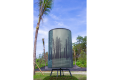
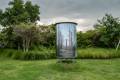
Arahmaiani’s work focuses on consciousness-raising. Since her emergence into public art actions in the late 1980s, her themes have revolved around democracy, equality, women’s liberation, freedom of faith and speech, and creative and collaborative solutions to the destruction of community and the environment. Her installation Sacred Coke (1993–2014) inaugurates later pieces using the ultimate symbol of American capitalism and consumerism spreading across the globe. In Nation for Sale (1996), the artist performs a wild, degrading dance dressed as a Balinese dancer: wielding a plastic gun, she mixes sacred traditional elements with those of capitalist violence and pop culture, to highlight how local elements are distorted, cheapened and commercialised to attract tourism and modernising investment.
Born in Bandung, Western Java, Indonesia, Arahmaiani Feisal is internationally known for her performance art, installations, videos and paintings. This extremely active artist is also a poet, essayist, speaker, teacher and community organiser. She obtained her BFA in Fine Arts at the Bandung Institute of Technology in 1983, with subsequent studies at the Paddington Art School, Sydney, Australia (1985–1986) and the Academie voor Beeldende Kunst, Enschede, Netherlands (1991–1992).
Arahmaiani’s work focuses on consciousness-raising. Since her emergence into public art actions in the late 1980s, her themes have revolved around democracy, equality, women’s liberation, freedom of faith and speech, and creative and collaborative solutions to the destruction of community and the environment. Her installation Sacred Coke (1993–2014) inaugurates later pieces using the ultimate symbol of American capitalism and consumerism spreading across the globe. In Nation for Sale (1996), the artist performs a wild, degrading dance dressed as a Balinese dancer: wielding a plastic gun, she mixes sacred traditional elements with those of capitalist violence and pop culture, to highlight how local elements are distorted, cheapened and commercialised to attract tourism and modernising investment.
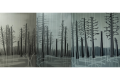
Beginning in around 2008, Arahmaiani has painted a series of large, meditative monochrome diptychs in a more biographical, but still universal manner. The diptych format signifies the meeting of two parts: for example, the Confluence series (2010–2013), where Confluence 1 (2013) shows the shadow outline of a nude, feminine figure in the place where two rivers become one – a statement that works on personal, political and universal-spiritual levels. Since the 2000s, spiritual and environmental themes have been combined in her work, performed with more stillness of expression but no less intensively messaged. An example of this is Shadow of the Past (2016).
Travelling and working between groups often in conflict with each other, Arahmaiani has formed ongoing relationships with religious and secular communities in Indonesia, Tibet, China and elsewhere, overcoming language and political barriers. In her interactive performances, Arahmaiani elicits words from the participants. In Breaking Words (2004–), she writes negative words offered by audience members onto plates with a magic marker and then smashes each plate against a wall. In Flag Project (2010–), participants choose a word for what they wish to see in the world. The group later marches together, carrying large, colourful flags bearing that word in print, manifesting their collective brainstorming process.
Arahmaiani collaborates with musicians, farmers, scholars and intellectuals on specific pieces. In Temple of Love (2024), created with Milosh Luczynski (1973–) and the collective Wayang Merdeka, the National Gallery, Singapore was covered with light, projecting a folktale about senseless destruction and healing. Arahmaiani performs her messages with full focus and commitment to each moment. Multisensory, embodied segments alternate with verbal interludes. Her art is both immediately accessible and complexly layered, inviting ongoing reflection and transformation.
Arahmaiani has exhibited internationally in some of the most important venues in the world, such as Tate Modern (2024). She has participated in biennales globally, including Jakarta (1993, 2015, 2003), Sao Paulo (2002), Venice (2003), Geneva (2003), Yinchuan (2018), Macau (2020), Istanbul (2022) and Busan (2023), and is also frequently invited to speak at international forums on peace, spirituality, and environmental and community issues.
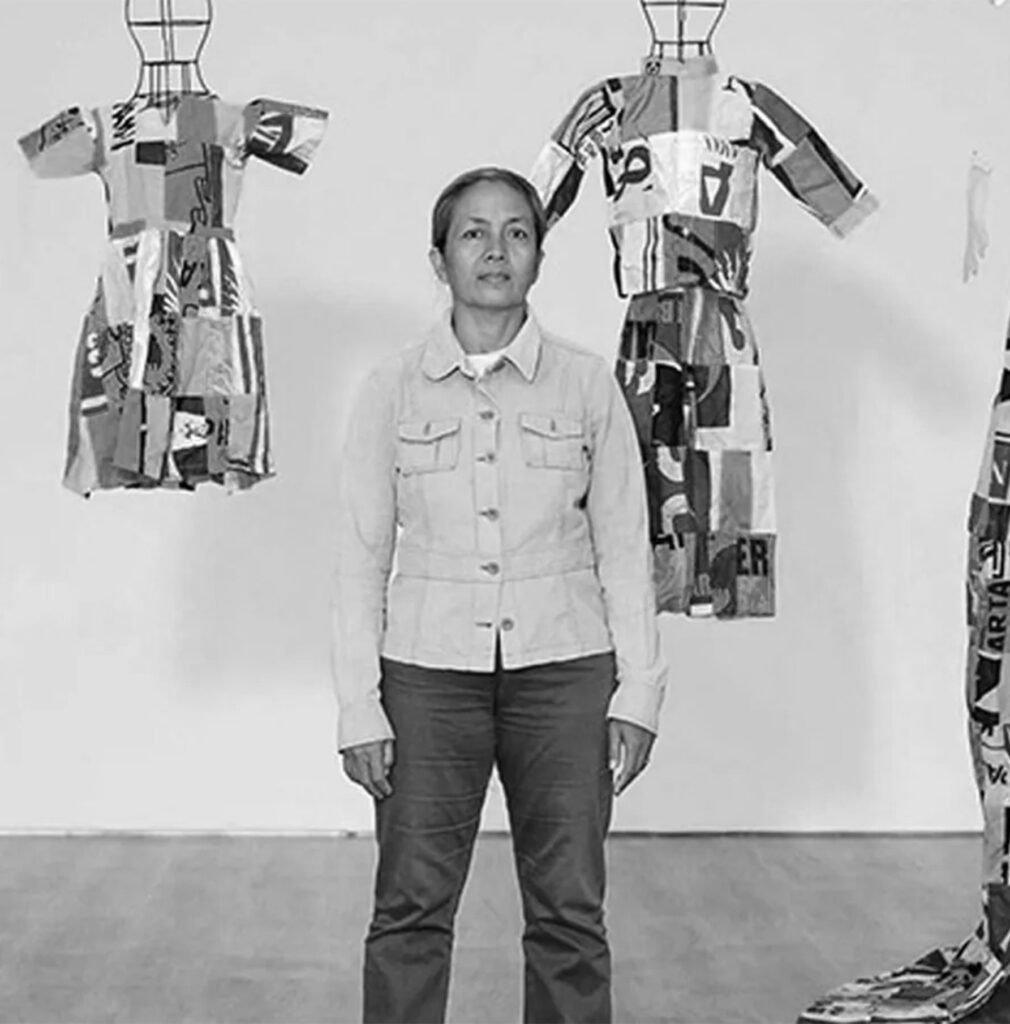
ARAHMAIANI FEISAL
Born in Bandung, Western Java, Indonesia, Arahmaiani Feisal is internationally known for her performance art, installations, videos and paintings. This extremely active artist is also a poet, essayist, speaker, teacher and community organiser...
Born in Bandung, Western Java, Indonesia, Arahmaiani Feisal is internationally known for her performance art, installations, videos and paintings. This extremely active artist is also a poet, essayist, speaker, teacher and community organiser. She obtained her BFA in Fine Arts at the Bandung Institute of Technology in 1983, with subsequent studies at the Paddington Art School, Sydney, Australia (1985–1986) and the Academie voor Beeldende Kunst, Enschede, Netherlands (1991–1992).
Arahmaiani’s work focuses on consciousness-raising. Since her emergence into public art actions in the late 1980s, her themes have revolved around democracy, equality, women’s liberation, freedom of faith and speech, and creative and collaborative solutions to the destruction of community and the environment. Her installation Sacred Coke (1993–2014) inaugurates later pieces using the ultimate symbol of American capitalism and consumerism spreading across the globe. In Nation for Sale (1996), the artist performs a wild, degrading dance dressed as a Balinese dancer: wielding a plastic gun, she mixes sacred traditional elements with those of capitalist violence and pop culture, to highlight how local elements are distorted, cheapened and commercialised to attract tourism and modernising investment.
Beginning in around 2008, Arahmaiani has painted a series of large, meditative monochrome diptychs in a more biographical, but still universal manner. The diptych format signifies the meeting of two parts: for example, the Confluence series (2010–2013), where Confluence 1 (2013) shows the shadow outline of a nude, feminine figure in the place where two rivers become one – a statement that works on personal, political and universal-spiritual levels. Since the 2000s, spiritual and environmental themes have been combined in her work, performed with more stillness of expression but no less intensively messaged. An example of this is Shadow of the Past (2016).
Travelling and working between groups often in conflict with each other, Arahmaiani has formed ongoing relationships with religious and secular communities in Indonesia, Tibet, China and elsewhere, overcoming language and political barriers. In her interactive performances, Arahmaiani elicits words from the participants. In Breaking Words (2004–), she writes negative words offered by audience members onto plates with a magic marker and then smashes each plate against a wall. In Flag Project (2010–), participants choose a word for what they wish to see in the world. The group later marches together, carrying large, colourful flags bearing that word in print, manifesting their collective brainstorming process.
Arahmaiani collaborates with musicians, farmers, scholars and intellectuals on specific pieces. In Temple of Love (2024), created with Milosh Luczynski (1973–) and the collective Wayang Merdeka, the National Gallery, Singapore was covered with light, projecting a folktale about senseless destruction and healing. Arahmaiani performs her messages with full focus and commitment to each moment. Multisensory, embodied segments alternate with verbal interludes. Her art is both immediately accessible and complexly layered, inviting ongoing reflection and transformation.
Arahmaiani has exhibited internationally in some of the most important venues in the world, such as Tate Modern (2024). She has participated in biennales globally, including Jakarta (1993, 2015, 2003), Sao Paulo (2002), Venice (2003), Geneva (2003), Yinchuan (2018), Macau (2020), Istanbul (2022) and Busan (2023), and is also frequently invited to speak at international forums on peace, spirituality, and environmental and community issues.
ARAHMAIANI FEISAL
Born in Bandung, Western Java, Indonesia, Arahmaiani Feisal is internationally known for her performance art, installations, videos and paintings. This extremely active artist is also a poet, essayist, speaker, teacher and community organiser. She obtained her BFA in Fine Arts at the Bandung Institute of Technology in 1983, with subsequent studies at the Paddington Art School, Sydney, Australia (1985–1986) and the Academie voor Beeldende Kunst, Enschede, Netherlands (1991–1992).
Arahmaiani’s work focuses on consciousness-raising. Since her emergence into public art actions in the late 1980s, her themes have revolved around democracy, equality, women’s liberation, freedom of faith and speech, and creative and collaborative solutions to the destruction of community and the environment. Her installation Sacred Coke (1993–2014) inaugurates later pieces using the ultimate symbol of American capitalism and consumerism spreading across the globe. In Nation for Sale (1996), the artist performs a wild, degrading dance dressed as a Balinese dancer: wielding a plastic gun, she mixes sacred traditional elements with those of capitalist violence and pop culture, to highlight how local elements are distorted, cheapened and commercialised to attract tourism and modernising investment.
Beginning in around 2008, Arahmaiani has painted a series of large, meditative monochrome diptychs in a more biographical, but still universal manner. The diptych format signifies the meeting of two parts: for example, the Confluence series (2010–2013), where Confluence 1 (2013) shows the shadow outline of a nude, feminine figure in the place where two rivers become one – a statement that works on personal, political and universal-spiritual levels. Since the 2000s, spiritual and environmental themes have been combined in her work, performed with more stillness of expression but no less intensively messaged. An example of this is Shadow of the Past (2016).
Travelling and working between groups often in conflict with each other, Arahmaiani has formed ongoing relationships with religious and secular communities in Indonesia, Tibet, China and elsewhere, overcoming language and political barriers. In her interactive performances, Arahmaiani elicits words from the participants. In Breaking Words (2004–), she writes negative words offered by audience members onto plates with a magic marker and then smashes each plate against a wall. In Flag Project (2010–), participants choose a word for what they wish to see in the world. The group later marches together, carrying large, colourful flags bearing that word in print, manifesting their collective brainstorming process.
Arahmaiani collaborates with musicians, farmers, scholars and intellectuals on specific pieces. In Temple of Love (2024), created with Milosh Luczynski (1973–) and the collective Wayang Merdeka, the National Gallery, Singapore was covered with light, projecting a folktale about senseless destruction and healing. Arahmaiani performs her messages with full focus and commitment to each moment. Multisensory, embodied segments alternate with verbal interludes. Her art is both immediately accessible and complexly layered, inviting ongoing reflection and transformation.
Arahmaiani has exhibited internationally in some of the most important venues in the world, such as Tate Modern (2024). She has participated in biennales globally, including Jakarta (1993, 2015, 2003), Sao Paulo (2002), Venice (2003), Geneva (2003), Yinchuan (2018), Macau (2020), Istanbul (2022) and Busan (2023), and is also frequently invited to speak at international forums on peace, spirituality, and environmental and community issues.
ARTWORK
ARTWORK
ARTWORK