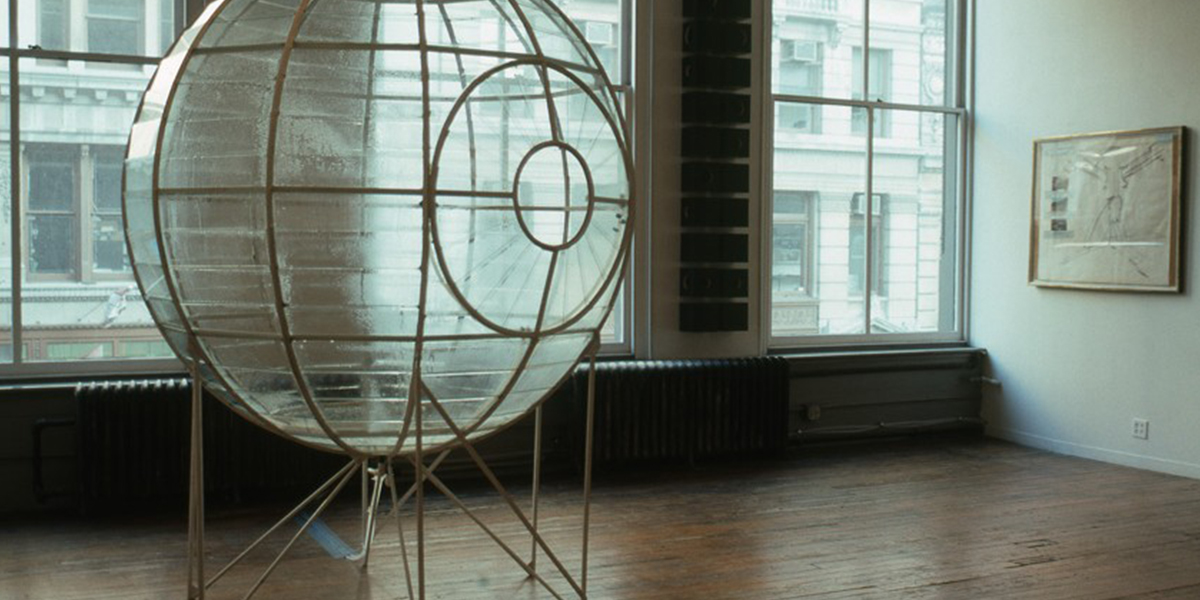
Fabien Giraud (born 1980) and Raphaël Siboni (born 1981) are a French artist duo whose collaborative practice explores the intersections of history, technology, and deep time. Working primarily in film, installation, and sculpture, their work often challenges human-centric perspectives by examining vast temporal scales—stretching from the prehistoric past to the distant, post-human future. They are perhaps best known for their ambitious, long-term project The Unmanned, which serves as a non-linear history of computing and the evolution of logic, tracing a path through pivotal moments such as the 1834 revolts of the Canut weavers and the death of Alan Turing.
Their artistic approach is characterized by a rigorous, almost archival precision, often incorporating complex philosophical frameworks and speculative narratives. By utilizing high-definition cinematography and industrial materials, they create immersive environments that question the “image” as a mere representation, instead treating it as a site of computation or a physical artifact of time. Their work has been exhibited internationally in major institutions, including the Palais de Tokyo in Paris, the Casino Luxembourg, and various international biennials, establishing them as significant figures in contemporary conceptual art.
Fabien Giraud (born 1980) and Raphaël Siboni (born 1981) are a French artist duo whose collaborative practice explores the intersections of history, technology...
Fabien Giraud (born 1980) and Raphaël Siboni (born 1981) are a French artist duo whose collaborative practice explores the intersections of history, technology, and deep time. Working primarily in film, installation, and sculpture, their work often challenges human-centric perspectives by examining vast temporal scales—stretching from the prehistoric past to the distant, post-human future. They are perhaps best known for their ambitious, long-term project The Unmanned, which serves as a non-linear history of computing and the evolution of logic, tracing a path through pivotal moments such as the 1834 revolts of the Canut weavers and the death of Alan Turing.
Their artistic approach is characterized by a rigorous, almost archival precision, often incorporating complex philosophical frameworks and speculative narratives. By utilizing high-definition cinematography and industrial materials, they create immersive environments that question the "image" as a mere representation, instead treating it as a site of computation or a physical artifact of time. Their work has been exhibited internationally in major institutions, including the Palais de Tokyo in Paris, the Casino Luxembourg, and various international biennials, establishing them as significant figures in contemporary conceptual art.
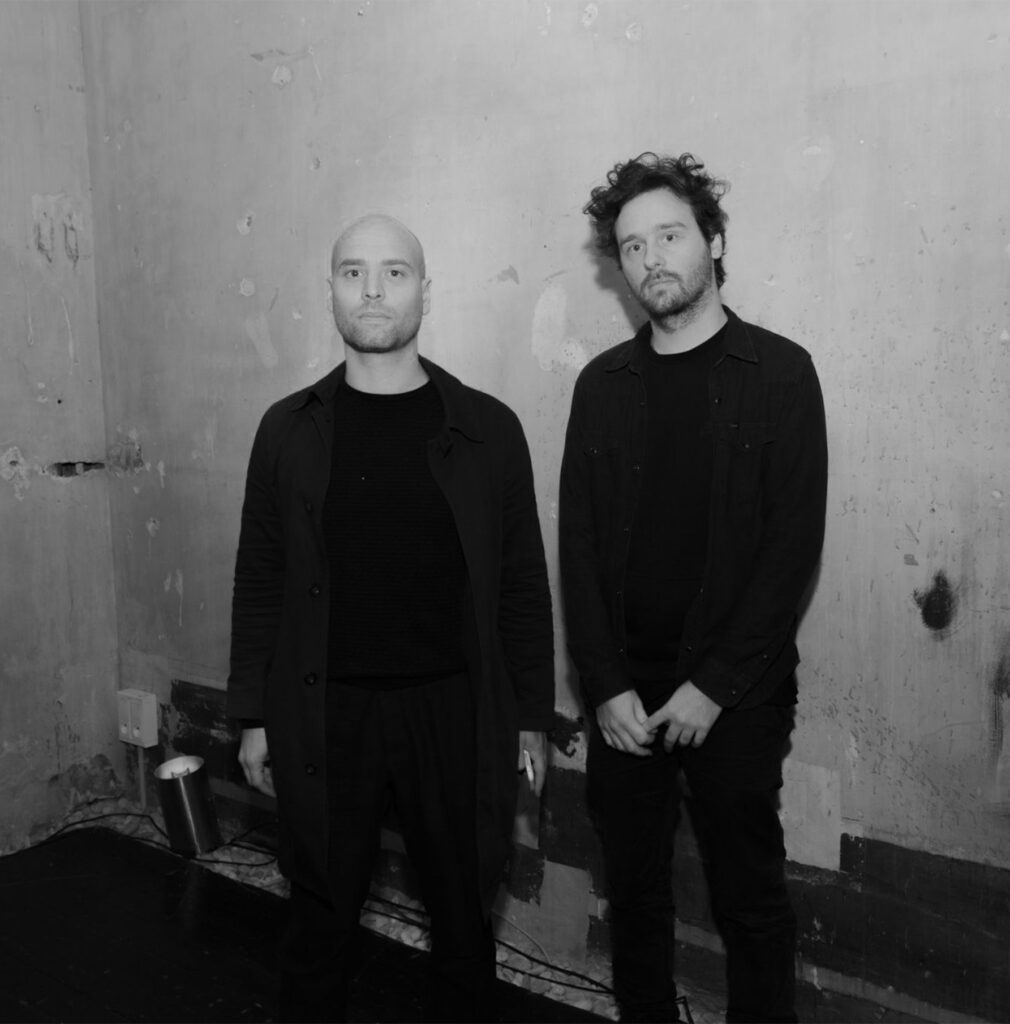
Fabien Giraud (born 1980) and Raphaël Siboni (born 1981) are a French artist duo whose collaborative practice explores the intersections of history, technology, and deep time. Working primarily in film, installation, and sculpture, their work often challenges human-centric perspectives by examining vast temporal scales—stretching from the prehistoric past to the distant, post-human future. They are perhaps best known for their ambitious, long-term project The Unmanned, which serves as a non-linear history of computing and the evolution of logic, tracing a path through pivotal moments such as the 1834 revolts of the Canut weavers and the death of Alan Turing.
Their artistic approach is characterized by a rigorous, almost archival precision, often incorporating complex philosophical frameworks and speculative narratives. By utilizing high-definition cinematography and industrial materials, they create immersive environments that question the “image” as a mere representation, instead treating it as a site of computation or a physical artifact of time. Their work has been exhibited internationally in major institutions, including the Palais de Tokyo in Paris, the Casino Luxembourg, and various international biennials, establishing them as significant figures in contemporary conceptual art.
ARTWORK
ARTWORK
ARTWORK