JOHN ROLOFF
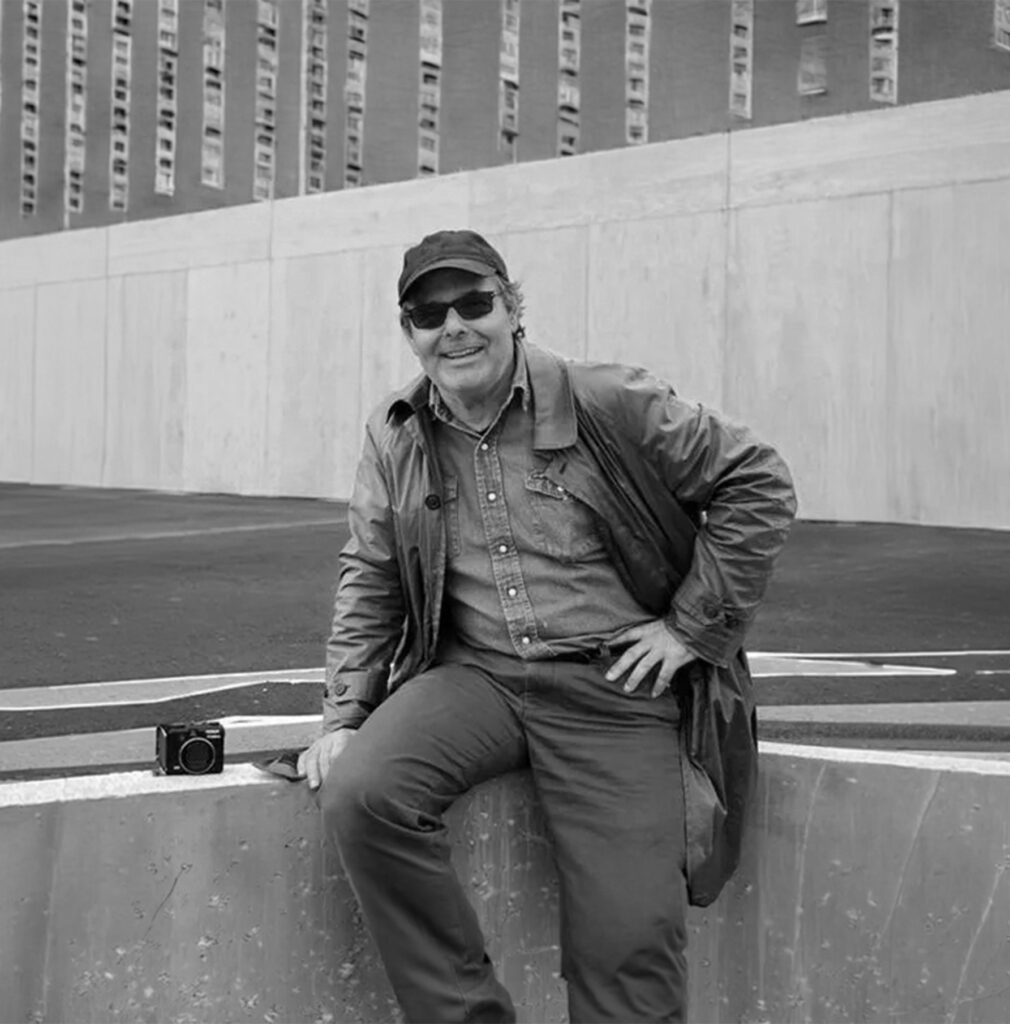
John Roloff (born 1947) is an American visual artist known for his conceptual approach to sculpture, site-specific installation, and photography. With a background in both art and geology, his work explores the complex relationship between the natural world, industrial processes, and the passage of geological time. Since the late 1960s, Roloff has developed a practice that investigates the Earth’s systems, often treating the landscape itself as a primary material. He gained early recognition for his "kiln-projects," in which he constructed large-scale, site-integrated furnaces that fired the earth in situ, transforming the ground into ceramic or glass to reveal the transformative power of heat and mineralogy.
His work often blurs the boundaries between scientific inquiry and artistic expression, addressing themes of ecology, climate, and the human impact on the environment. Many of his projects, such as the Deep Gradient/Suspect Terrain series, utilize a multidisciplinary framework to map the hidden histories of urban and rural sites. Roloff’s installations frequently involve architectural elements, botanical specimens, and digital mapping to highlight the layered, often invisible forces—such as sea-level change or tectonic shifts—that shape a specific location. By framing the landscape as a "systemic" entity, his work encourages a perspective that extends beyond human scales of time and memory.
John Roloff (born 1947) is an American visual artist known for his conceptual approach to sculpture, site-specific installation, and photography. With a background in both art and geology, his work explores the complex relationship between the natural world, industrial processes, and the passage of geological time. Since the late 1960s, Roloff has developed a practice that investigates the Earth’s systems, often treating the landscape itself as a primary material. He gained early recognition for his "kiln-projects," in which he constructed large-scale, site-integrated furnaces that fired the earth in situ, transforming the ground into ceramic or glass to reveal the transformative power of heat and mineralogy.
His work often blurs the boundaries between scientific inquiry and artistic expression, addressing themes of ecology, climate, and the human impact on the environment. Many of his projects, such as the Deep Gradient/Suspect Terrain series, utilize a multidisciplinary framework to map the hidden histories of urban and rural sites. Roloff’s installations frequently involve architectural elements, botanical specimens, and digital mapping to highlight the layered, often invisible forces—such as sea-level change or tectonic shifts—that shape a specific location. By framing the landscape as a "systemic" entity, his work encourages a perspective that extends beyond human scales of time and memory.
Roloff has been a significant figure in the San Francisco Bay Area art community, serving as a long-time professor at the San Francisco Art Institute. His works have been exhibited at major institutions including the Smithsonian American Art Museum, the San Francisco Museum of Modern Art, and the Venice Biennale. Throughout his career, he has received numerous grants from the National Endowment for the Arts and the Guggenheim Foundation. His legacy is defined by an enduring commitment to "environmental metabolism," creating a body of work that functions as both a poetic meditation on the Earth and a rigorous critique of how we perceive and inhabit the physical world.
JOHN ROLOFF
John Roloff (born 1947) is an American visual artist known for his conceptual approach to sculpture, site-specific installation, and photography. With a background in both art and geology, his work explores the complex relationship between the natural world, industrial processes, and the passage of geological...
John Roloff (born 1947) is an American visual artist known for his conceptual approach to sculpture, site-specific installation, and photography. With a background in both art and geology, his work explores the complex relationship between the natural world, industrial processes, and the passage of geological time. Since the late 1960s, Roloff has developed a practice that investigates the Earth’s systems, often treating the landscape itself as a primary material. He gained early recognition for his "kiln-projects," in which he constructed large-scale, site-integrated furnaces that fired the earth in situ, transforming the ground into ceramic or glass to reveal the transformative power of heat and mineralogy.
His work often blurs the boundaries between scientific inquiry and artistic expression, addressing themes of ecology, climate, and the human impact on the environment. Many of his projects, such as the Deep Gradient/Suspect Terrain series, utilize a multidisciplinary framework to map the hidden histories of urban and rural sites. Roloff’s installations frequently involve architectural elements, botanical specimens, and digital mapping to highlight the layered, often invisible forces—such as sea-level change or tectonic shifts—that shape a specific location. By framing the landscape as a "systemic" entity, his work encourages a perspective that extends beyond human scales of time and memory.
Roloff has been a significant figure in the San Francisco Bay Area art community, serving as a long-time professor at the San Francisco Art Institute. His works have been exhibited at major institutions including the Smithsonian American Art Museum, the San Francisco Museum of Modern Art, and the Venice Biennale. Throughout his career, he has received numerous grants from the National Endowment for the Arts and the Guggenheim Foundation. His legacy is defined by an enduring commitment to "environmental metabolism," creating a body of work that functions as both a poetic meditation on the Earth and a rigorous critique of how we perceive and inhabit the physical world.
JOHN ROLOFF
John Roloff (born 1947) is an American visual artist known for his conceptual approach to sculpture, site-specific installation, and photography. With a background in both art and geology, his work explores the complex relationship between the natural world, industrial processes, and the passage of geological time. Since the late 1960s, Roloff has developed a practice that investigates the Earth’s systems, often treating the landscape itself as a primary material. He gained early recognition for his “kiln-projects,” in which he constructed large-scale, site-integrated furnaces that fired the earth in situ, transforming the ground into ceramic or glass to reveal the transformative power of heat and mineralogy.
His work often blurs the boundaries between scientific inquiry and artistic expression, addressing themes of ecology, climate, and the human impact on the environment. Many of his projects, such as the Deep Gradient/Suspect Terrain series, utilize a multidisciplinary framework to map the hidden histories of urban and rural sites. Roloff’s installations frequently involve architectural elements, botanical specimens, and digital mapping to highlight the layered, often invisible forces—such as sea-level change or tectonic shifts—that shape a specific location. By framing the landscape as a “systemic” entity, his work encourages a perspective that extends beyond human scales of time and memory.
Roloff has been a significant figure in the San Francisco Bay Area art community, serving as a long-time professor at the San Francisco Art Institute. His works have been exhibited at major institutions including the Smithsonian American Art Museum, the San Francisco Museum of Modern Art, and the Venice Biennale. Throughout his career, he has received numerous grants from the National Endowment for the Arts and the Guggenheim Foundation. His legacy is defined by an enduring commitment to “environmental metabolism,” creating a body of work that functions as both a poetic meditation on the Earth and a rigorous critique of how we perceive and inhabit the physical world.
ARTWORK
ARTWORK
ARTWORK