PIERO GOLIA
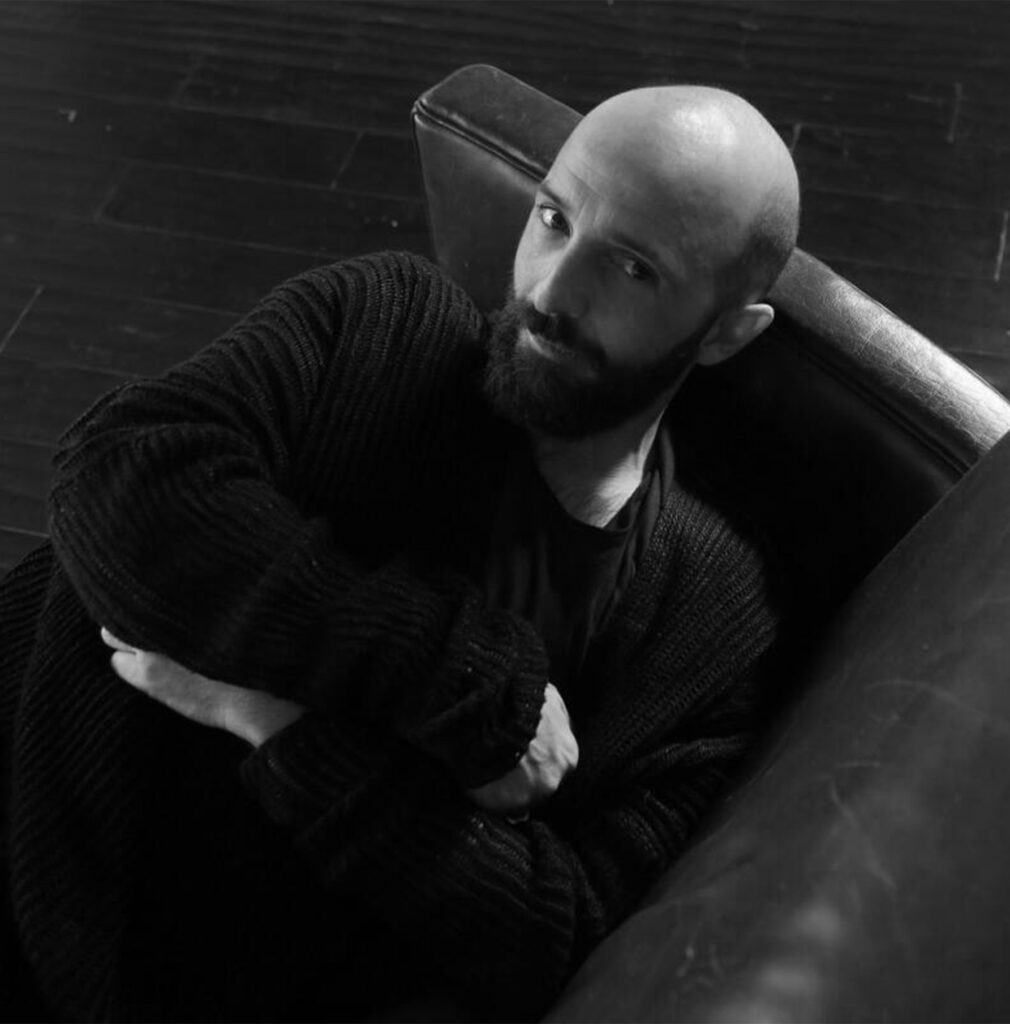
Piero Golia (born 1974) is an Italian-born, Los Angeles-based conceptual artist known for a practice that emphasizes the "sculpting of situations" over the creation of static objects. Originally trained in chemical engineering in Naples, Golia shifted to the arts in the late 1990s and moved to Los Angeles in 2002. His work frequently involves high-stakes gestures, mischievous interventions, and large-scale installations that challenge the logistical and social boundaries of the art world. Notable early actions include Going to Tirana (2000), where he rowed across the Adriatic Sea against the direction of migrant flow, and his contribution to the 2005 Venice Biennale, where he convinced a woman to live atop a pole for the duration of the exhibition.
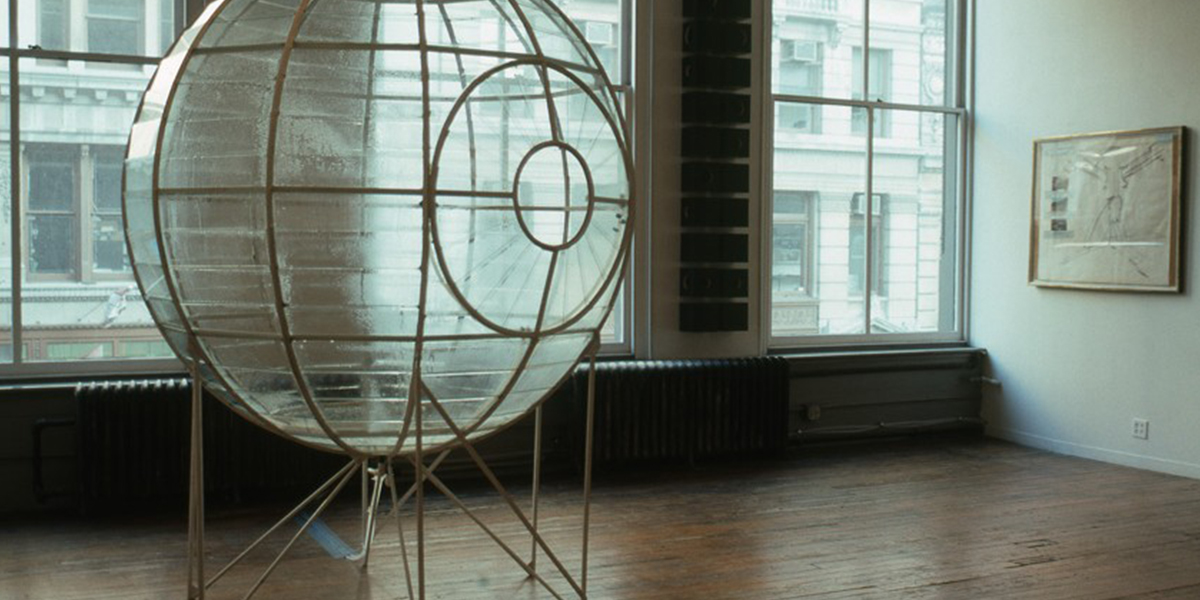
Golia's work often functions as a Gesamtkunstwerk (total work of art), blending architecture, performance, and social choreography. A prominent example is Chalet Hollywood (2013–2014), a year-long "social sculpture" created in collaboration with architect Edwin Chan. The project transformed a storage space into an invite-only salon featuring modular oak furnishings and high-end art, designed to foster unchoreographed community interaction in response to Los Angeles' urban sprawl. His technical range is similarly broad, spanning from Untitled (Bus) (2008), which featured a full-sized crushed bus, to the Intermission Paintings and kinetic sculptures like The Painter (2017), a robot that generated geometric forms in response to human movement.
Piero Golia (born 1974) is an Italian-born, Los Angeles-based conceptual artist known for a practice that emphasizes the "sculpting of situations" over the creation of static objects. Originally trained in chemical engineering in Naples, Golia shifted to the arts in the late 1990s and moved to Los Angeles in 2002. His work frequently involves high-stakes gestures, mischievous interventions, and large-scale installations that challenge the logistical and social boundaries of the art world. Notable early actions include Going to Tirana (2000), where he rowed across the Adriatic Sea against the direction of migrant flow, and his contribution to the 2005 Venice Biennale, where he convinced a woman to live atop a pole for the duration of the exhibition.
Golia's work often functions as a Gesamtkunstwerk (total work of art), blending architecture, performance, and social choreography. A prominent example is Chalet Hollywood (2013–2014), a year-long "social sculpture" created in collaboration with architect Edwin Chan. The project transformed a storage space into an invite-only salon featuring modular oak furnishings and high-end art, designed to foster unchoreographed community interaction in response to Los Angeles' urban sprawl. His technical range is similarly broad, spanning from Untitled (Bus) (2008), which featured a full-sized crushed bus, to the Intermission Paintings and kinetic sculptures like The Painter (2017), a robot that generated geometric forms in response to human movement.
Throughout his career, Golia has been featured in major international institutions, including the Los Angeles County Museum of Art (LACMA), MoMA PS1, and the Stedelijk Museum. His practice remains characterized by a negotiation between poetic vision and real-world constraints—such as city laws and financial risk—often resulting in works that exist as much in the legends they generate as in their physical forms. In 2026, his work continues to be exhibited globally, including a recent retrospective at the MAXXI National Museum of 21st Century Arts in Rome.
PIERO GOLIA
Piero Golia (born 1974) is an Italian-born, Los Angeles-based conceptual artist known for a practice that emphasizes the "sculpting of situations" over the creation of static objects. Originally trained in chemical engineering in Naples, Golia shifted to the arts in the late 1990s and moved to Los Angeles in 2002. His work...
Piero Golia (born 1974) is an Italian-born, Los Angeles-based conceptual artist known for a practice that emphasizes the "sculpting of situations" over the creation of static objects. Originally trained in chemical engineering in Naples, Golia shifted to the arts in the late 1990s and moved to Los Angeles in 2002. His work frequently involves high-stakes gestures, mischievous interventions, and large-scale installations that challenge the logistical and social boundaries of the art world. Notable early actions include Going to Tirana (2000), where he rowed across the Adriatic Sea against the direction of migrant flow, and his contribution to the 2005 Venice Biennale, where he convinced a woman to live atop a pole for the duration of the exhibition.
Golia's work often functions as a Gesamtkunstwerk (total work of art), blending architecture, performance, and social choreography. A prominent example is Chalet Hollywood (2013–2014), a year-long "social sculpture" created in collaboration with architect Edwin Chan. The project transformed a storage space into an invite-only salon featuring modular oak furnishings and high-end art, designed to foster unchoreographed community interaction in response to Los Angeles' urban sprawl. His technical range is similarly broad, spanning from Untitled (Bus) (2008), which featured a full-sized crushed bus, to the Intermission Paintings and kinetic sculptures like The Painter (2017), a robot that generated geometric forms in response to human movement.
Throughout his career, Golia has been featured in major international institutions, including the Los Angeles County Museum of Art (LACMA), MoMA PS1, and the Stedelijk Museum. His practice remains characterized by a negotiation between poetic vision and real-world constraints—such as city laws and financial risk—often resulting in works that exist as much in the legends they generate as in their physical forms. In 2026, his work continues to be exhibited globally, including a recent retrospective at the MAXXI National Museum of 21st Century Arts in Rome.
PIERO GOLIA
Piero Golia (born 1974) is an Italian-born, Los Angeles-based conceptual artist known for a practice that emphasizes the “sculpting of situations” over the creation of static objects. Originally trained in chemical engineering in Naples, Golia shifted to the arts in the late 1990s and moved to Los Angeles in 2002. His work frequently involves high-stakes gestures, mischievous interventions, and large-scale installations that challenge the logistical and social boundaries of the art world. Notable early actions include Going to Tirana (2000), where he rowed across the Adriatic Sea against the direction of migrant flow, and his contribution to the 2005 Venice Biennale, where he convinced a woman to live atop a pole for the duration of the exhibition.
Golia’s work often functions as a Gesamtkunstwerk (total work of art), blending architecture, performance, and social choreography. A prominent example is Chalet Hollywood (2013–2014), a year-long “social sculpture” created in collaboration with architect Edwin Chan. The project transformed a storage space into an invite-only salon featuring modular oak furnishings and high-end art, designed to foster unchoreographed community interaction in response to Los Angeles’ urban sprawl. His technical range is similarly broad, spanning from Untitled (Bus) (2008), which featured a full-sized crushed bus, to the Intermission Paintings and kinetic sculptures like The Painter (2017), a robot that generated geometric forms in response to human movement.
Throughout his career, Golia has been featured in major international institutions, including the Los Angeles County Museum of Art (LACMA), MoMA PS1, and the Stedelijk Museum. His practice remains characterized by a negotiation between poetic vision and real-world constraints—such as city laws and financial risk—often resulting in works that exist as much in the legends they generate as in their physical forms. In 2026, his work continues to be exhibited globally, including a recent retrospective at the MAXXI National Museum of 21st Century Arts in Rome.
ARTWORK
ARTWORK
ARTWORK