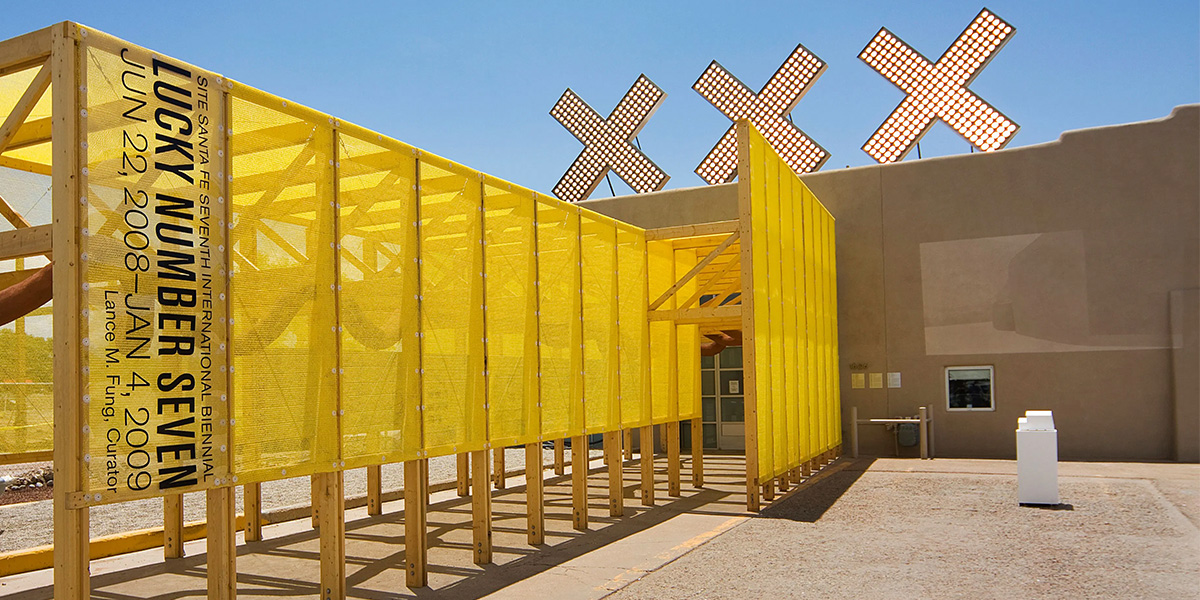
TOD WILLIAMS & BILLIE TSIEN
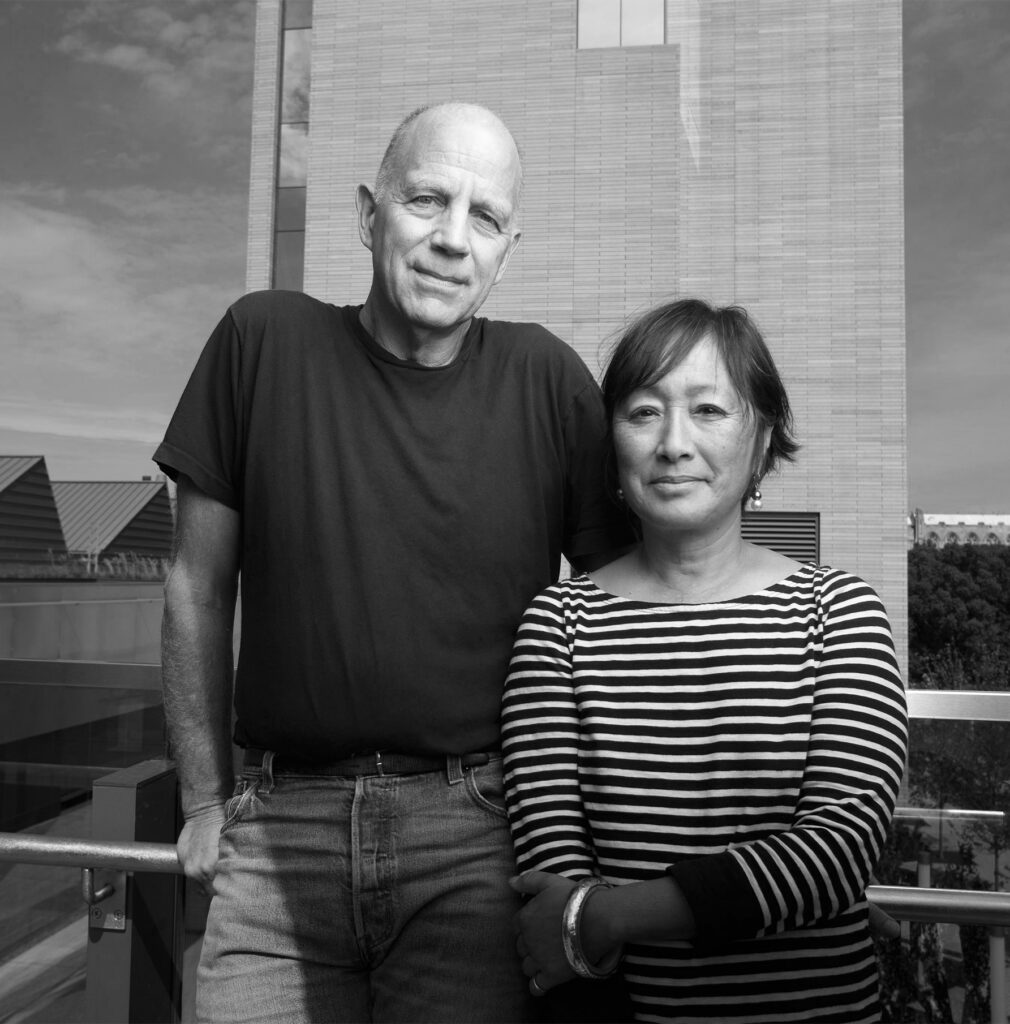
Tod Williams (born 1943) and Billie Tsien (born 1949) are a distinguished architectural duo based in New York City, known for their focus on "slowness," materiality, and the creation of serene, highly detailed spaces. After forming their partnership in 1986 and founding Tod Williams Billie Tsien Architects (TWBTA), they built a practice centered on institutional and cultural projects, including museums, schools, and non-profit centers. Their approach is characterized by a deep attention to the tactile qualities of surfaces—often utilizing stone, wood, and textured concrete—and a commitment to architecture that serves the long-term needs of its occupants rather than following fleeting aesthetic trends.
The firm achieved international acclaim with the design of the American Folk Art Museum (2001) in Manhattan, which was celebrated for its intricate bronze-alloy facade and its vertical, labyrinthine interior. Though the building was later demolished for the expansion of MoMA, it established the duo as masters of intimate, complex space. Other significant works include the Barnes Foundation (2012) in Philadelphia, where they successfully replicated the original gallery layout within a contemporary, light-filled structure, and the Lefrak Center at Lakeside (2013) in Prospect Park. Their work often integrates light and landscape, creating a sense of quietude and permanence within busy urban environments.
Tod Williams (born 1943) and Billie Tsien (born 1949) are a distinguished architectural duo based in New York City, known for their focus on "slowness," materiality, and the creation of serene, highly detailed spaces. After forming their partnership in 1986 and founding Tod Williams Billie Tsien Architects (TWBTA), they built a practice centered on institutional and cultural projects, including museums, schools, and non-profit centers. Their approach is characterized by a deep attention to the tactile qualities of surfaces—often utilizing stone, wood, and textured concrete—and a commitment to architecture that serves the long-term needs of its occupants rather than following fleeting aesthetic trends.
The firm achieved international acclaim with the design of the American Folk Art Museum (2001) in Manhattan, which was celebrated for its intricate bronze-alloy facade and its vertical, labyrinthine interior. Though the building was later demolished for the expansion of MoMA, it established the duo as masters of intimate, complex space. Other significant works include the Barnes Foundation (2012) in Philadelphia, where they successfully replicated the original gallery layout within a contemporary, light-filled structure, and the Lefrak Center at Lakeside (2013) in Prospect Park. Their work often integrates light and landscape, creating a sense of quietude and permanence within busy urban environments.
Williams and Tsien have been recognized with some of the highest honors in the field, including the AIA Architecture Firm Award (2013) and the National Medal of Arts (2013). In 2016, their firm was selected for the high-profile commission of the Obama Presidential Center in Chicago, a project designed to function as both a library and a community hub within a public park. Their practice continues to be a partnership of complementary perspectives, with Tsien often focusing on the narrative and material qualities of a project while Williams emphasizes the structural and philosophical rigor. They remain influential educators and practitioners, advocating for an architecture that is both physically enduring and socially responsible.
TOD WILLIAMS & BILLIE TSIEN
Tod Williams (born 1943) and Billie Tsien (born 1949) are a distinguished architectural duo based in New York City, known for their focus on "slowness," materiality, and the creation of serene, highly detailed spaces. After forming...
Tod Williams (born 1943) and Billie Tsien (born 1949) are a distinguished architectural duo based in New York City, known for their focus on "slowness," materiality, and the creation of serene, highly detailed spaces. After forming their partnership in 1986 and founding Tod Williams Billie Tsien Architects (TWBTA), they built a practice centered on institutional and cultural projects, including museums, schools, and non-profit centers. Their approach is characterized by a deep attention to the tactile qualities of surfaces—often utilizing stone, wood, and textured concrete—and a commitment to architecture that serves the long-term needs of its occupants rather than following fleeting aesthetic trends.
The firm achieved international acclaim with the design of the American Folk Art Museum (2001) in Manhattan, which was celebrated for its intricate bronze-alloy facade and its vertical, labyrinthine interior. Though the building was later demolished for the expansion of MoMA, it established the duo as masters of intimate, complex space. Other significant works include the Barnes Foundation (2012) in Philadelphia, where they successfully replicated the original gallery layout within a contemporary, light-filled structure, and the Lefrak Center at Lakeside (2013) in Prospect Park. Their work often integrates light and landscape, creating a sense of quietude and permanence within busy urban environments.
Williams and Tsien have been recognized with some of the highest honors in the field, including the AIA Architecture Firm Award (2013) and the National Medal of Arts (2013). In 2016, their firm was selected for the high-profile commission of the Obama Presidential Center in Chicago, a project designed to function as both a library and a community hub within a public park. Their practice continues to be a partnership of complementary perspectives, with Tsien often focusing on the narrative and material qualities of a project while Williams emphasizes the structural and philosophical rigor. They remain influential educators and practitioners, advocating for an architecture that is both physically enduring and socially responsible.
TOD WILLIAMS & BILLIE TSIEN
Tod Williams (born 1943) and Billie Tsien (born 1949) are a distinguished architectural duo based in New York City, known for their focus on “slowness,” materiality, and the creation of serene, highly detailed spaces. After forming their partnership in 1986 and founding Tod Williams Billie Tsien Architects (TWBTA), they built a practice centered on institutional and cultural projects, including museums, schools, and non-profit centers. Their approach is characterized by a deep attention to the tactile qualities of surfaces—often utilizing stone, wood, and textured concrete—and a commitment to architecture that serves the long-term needs of its occupants rather than following fleeting aesthetic trends.
The firm achieved international acclaim with the design of the American Folk Art Museum (2001) in Manhattan, which was celebrated for its intricate bronze-alloy facade and its vertical, labyrinthine interior. Though the building was later demolished for the expansion of MoMA, it established the duo as masters of intimate, complex space. Other significant works include the Barnes Foundation (2012) in Philadelphia, where they successfully replicated the original gallery layout within a contemporary, light-filled structure, and the Lefrak Center at Lakeside (2013) in Prospect Park. Their work often integrates light and landscape, creating a sense of quietude and permanence within busy urban environments.
Williams and Tsien have been recognized with some of the highest honors in the field, including the AIA Architecture Firm Award (2013) and the National Medal of Arts (2013). In 2016, their firm was selected for the high-profile commission of the Obama Presidential Center in Chicago, a project designed to function as both a library and a community hub within a public park. Their practice continues to be a partnership of complementary perspectives, with Tsien often focusing on the narrative and material qualities of a project while Williams emphasizes the structural and philosophical rigor. They remain influential educators and practitioners, advocating for an architecture that is both physically enduring and socially responsible.
ARTWORK
ARTWORK
ARTWORK