
WAEL SHAWKY
Wael Shawky (born 1971) is an Egyptian contemporary artist known for his complex film, installation, and performance works that re-examine historical narratives through the lens of myth and puppet theater. After studying at the University of Alexandria and later earning an MFA from the University of Pennsylvania, Shawky gained international recognition for his meticulous approach to storytelling. His practice often involves the translation of historical texts into cinematic experiences, utilizing unconventional casts—such as marionettes, children, or non-professional actors—to create a sense of estrangement that allows viewers to look at established histories from new perspectives.
Shawky is perhaps most widely acclaimed for his epic film trilogy, Cabaret Crusades (2010–2015), which recounts the history of the Crusades based on Arab perspectives. The trilogy features hundreds of custom-made puppets—ranging from 18th-century Italian marionettes to hand-painted ceramic figures—to depersonalize the violence and politics of the era, focusing instead on the systemic shifts in power. Another major work, Al Araba Al Madfuna (2012–2015), utilizes child actors dressed in adult clothing and speaking in deep, dubbed voices to dramatize stories of the Egyptian village of Al Araba Al Madfuna, blending local folklore with the realities of the contemporary Egyptian landscape.
Wael Shawky (born 1971) is an Egyptian contemporary artist known for his complex film, installation, and performance works that re-examine historical narratives through the lens of myth and puppet theater. After studying at the University of Alexandria and later earning an MFA from the University of Pennsylvania, Shawky gained international recognition for his meticulous approach to storytelling. His practice often involves the translation of historical texts into cinematic experiences, utilizing unconventional casts—such as marionettes, children, or non-professional actors—to create a sense of estrangement that allows viewers to look at established histories from new perspectives.
Shawky is perhaps most widely acclaimed for his epic film trilogy, Cabaret Crusades (2010–2015), which recounts the history of the Crusades based on Arab perspectives. The trilogy features hundreds of custom-made puppets—ranging from 18th-century Italian marionettes to hand-painted ceramic figures—to depersonalize the violence and politics of the era, focusing instead on the systemic shifts in power. Another major work, Al Araba Al Madfuna (2012–2015), utilizes child actors dressed in adult clothing and speaking in deep, dubbed voices to dramatize stories of the Egyptian village of Al Araba Al Madfuna, blending local folklore with the realities of the contemporary Egyptian landscape.
Throughout his career, Shawky has been featured in major solo exhibitions at institutions such as MoMA PS1 in New York, the Serpentine Galleries in London, and the Castello di Rivoli in Italy. In 2024, he was selected to represent Egypt at the 60th Venice Biennale, where he presented Drama 1882, a filmed musical play centered on the 1882 Urabi Revolution against imperial rule in Egypt. His work is characterized by a commitment to rigorous research and a high level of craftsmanship in drawing, sculpture, and film. By reframing history as a series of staged performances, Shawky continues to explore the intersections of memory, religion, and the construction of national identity in the Arab world and beyond.
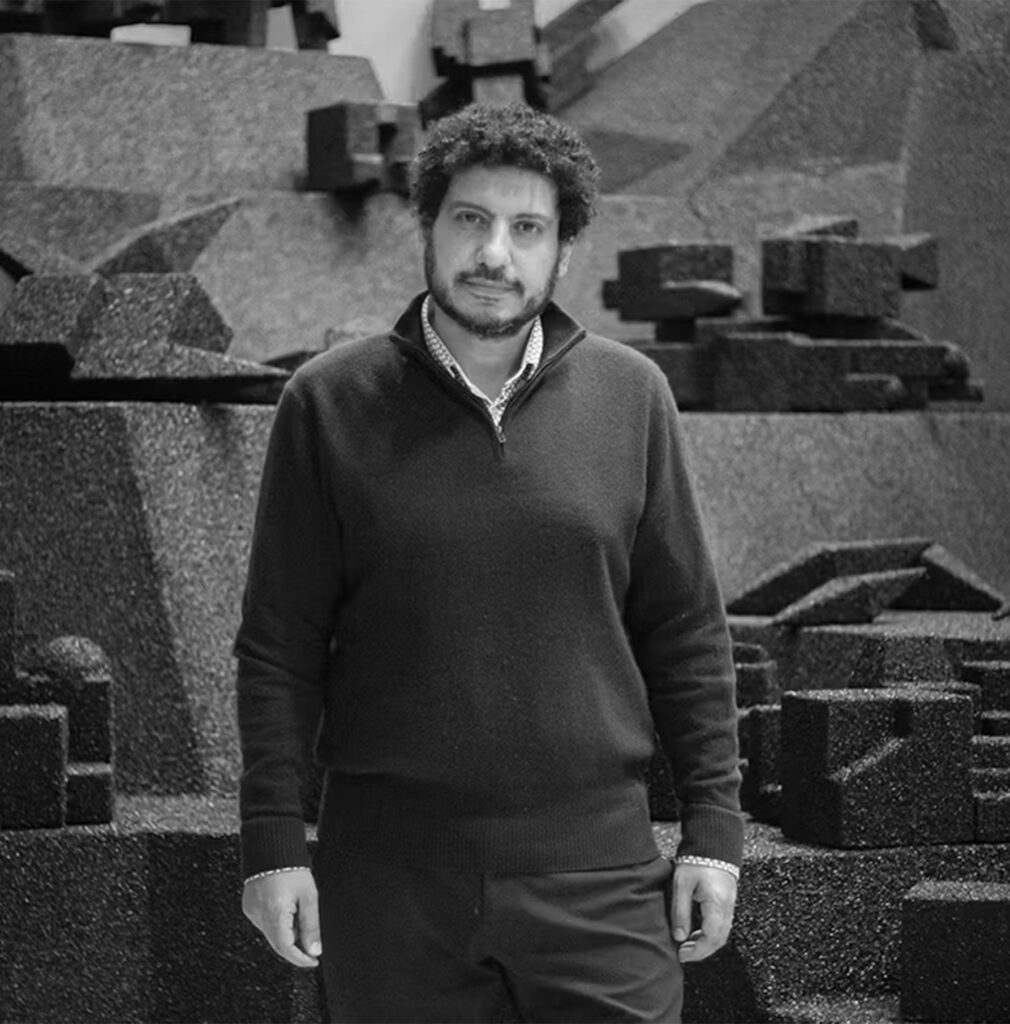
WAEL SHAWKY
Wael Shawky (born 1971) is an Egyptian contemporary artist known for his complex film, installation, and performance works that re-examine historical narratives through the lens of myth and puppet theater. After studying at the University of Alexandria and later earning an MFA from the University...
Wael Shawky (born 1971) is an Egyptian contemporary artist known for his complex film, installation, and performance works that re-examine historical narratives through the lens of myth and puppet theater. After studying at the University of Alexandria and later earning an MFA from the University of Pennsylvania, Shawky gained international recognition for his meticulous approach to storytelling. His practice often involves the translation of historical texts into cinematic experiences, utilizing unconventional casts—such as marionettes, children, or non-professional actors—to create a sense of estrangement that allows viewers to look at established histories from new perspectives.
Shawky is perhaps most widely acclaimed for his epic film trilogy, Cabaret Crusades (2010–2015), which recounts the history of the Crusades based on Arab perspectives. The trilogy features hundreds of custom-made puppets—ranging from 18th-century Italian marionettes to hand-painted ceramic figures—to depersonalize the violence and politics of the era, focusing instead on the systemic shifts in power. Another major work, Al Araba Al Madfuna (2012–2015), utilizes child actors dressed in adult clothing and speaking in deep, dubbed voices to dramatize stories of the Egyptian village of Al Araba Al Madfuna, blending local folklore with the realities of the contemporary Egyptian landscape.
Throughout his career, Shawky has been featured in major solo exhibitions at institutions such as MoMA PS1 in New York, the Serpentine Galleries in London, and the Castello di Rivoli in Italy. In 2024, he was selected to represent Egypt at the 60th Venice Biennale, where he presented Drama 1882, a filmed musical play centered on the 1882 Urabi Revolution against imperial rule in Egypt. His work is characterized by a commitment to rigorous research and a high level of craftsmanship in drawing, sculpture, and film. By reframing history as a series of staged performances, Shawky continues to explore the intersections of memory, religion, and the construction of national identity in the Arab world and beyond.
WAEL SHAWKY
Wael Shawky (born 1971) is an Egyptian contemporary artist known for his complex film, installation, and performance works that re-examine historical narratives through the lens of myth and puppet theater. After studying at the University of Alexandria and later earning an MFA from the University of Pennsylvania, Shawky gained international recognition for his meticulous approach to storytelling. His practice often involves the translation of historical texts into cinematic experiences, utilizing unconventional casts—such as marionettes, children, or non-professional actors—to create a sense of estrangement that allows viewers to look at established histories from new perspectives.
Shawky is perhaps most widely acclaimed for his epic film trilogy, Cabaret Crusades (2010–2015), which recounts the history of the Crusades based on Arab perspectives. The trilogy features hundreds of custom-made puppets—ranging from 18th-century Italian marionettes to hand-painted ceramic figures—to depersonalize the violence and politics of the era, focusing instead on the systemic shifts in power. Another major work, Al Araba Al Madfuna (2012–2015), utilizes child actors dressed in adult clothing and speaking in deep, dubbed voices to dramatize stories of the Egyptian village of Al Araba Al Madfuna, blending local folklore with the realities of the contemporary Egyptian landscape.
Throughout his career, Shawky has been featured in major solo exhibitions at institutions such as MoMA PS1 in New York, the Serpentine Galleries in London, and the Castello di Rivoli in Italy. In 2024, he was selected to represent Egypt at the 60th Venice Biennale, where he presented Drama 1882, a filmed musical play centered on the 1882 Urabi Revolution against imperial rule in Egypt. His work is characterized by a commitment to rigorous research and a high level of craftsmanship in drawing, sculpture, and film. By reframing history as a series of staged performances, Shawky continues to explore the intersections of memory, religion, and the construction of national identity in the Arab world and beyond.
ARTWORK
ARTWORK
ARTWORK


