• SELECTED ARTISTS
  • SELECTED PROJECTS
  • SELECTED PRESS
  • CONTACT
FUNG COLLABORATIVESFUNG COLLABORATIVES
  • SELECTED ARTISTS
  • SELECTED PROJECTS
  • SELECTED PRESS
  • CONTACT

NAM JUNE PAIK

Skin has become inadequate in interfacing with reality. Technology has become the body’s new membrane of existence.
—Nam June Paik

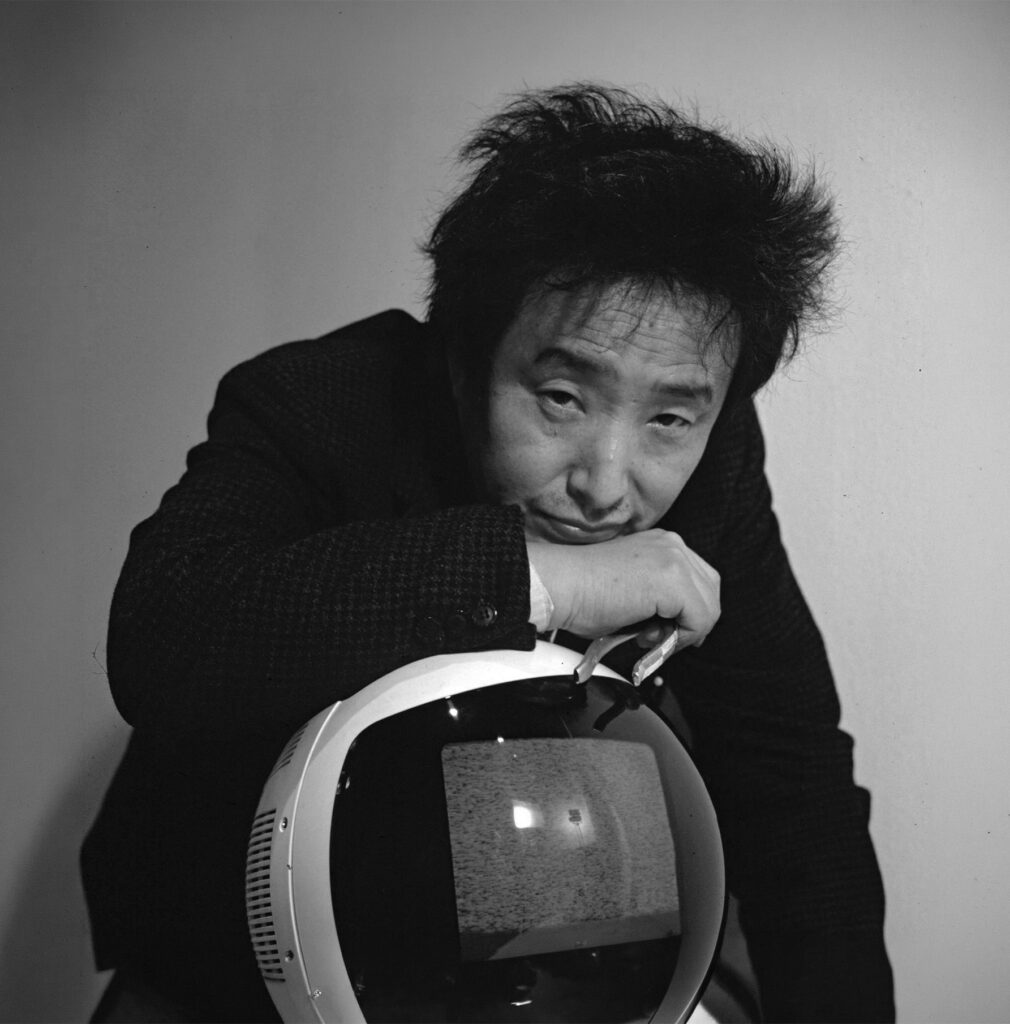
Nam June Paik (1932–2006) brought the television to fine art, treating it as a tactile and multisensory medium and object. Trained as a classical pianist, he came into contact with protagonists of the counterculture and avant-garde movements of the 1960s through his early interests in composition and performance, and this engagement profoundly shaped his outlook at a time when electronic images were becoming increasingly present in everyday life. His groundbreaking work is considered seminal to the development of video art.

Born in Seoul, Paik fled with his family in 1950 to escape the Korean War, traveling first to Hong Kong and then to Japan. After graduating from the University of Tokyo in 1956, he moved to West Germany to continue his studies. There he met the composers Karlheinz Stockhausen and John Cage, as well as the conceptual artists George Maciunas and Joseph Beuys, all of whom deeply affected his thoughts on performance. He joined the Fluxus group in 1962 and moved from the manual manipulation of audiotapes to experimenting with television sets and their screens. Two years later, by this time living in New York, Paik met the cellist Charlotte Moorman, a central figure of the city’s avant-garde, and the two began a collaboration that would last until her death in 1991. Paik created many of his most well-known works for Moorman, including TV Bra for Living Sculpture (1969) and TV-Cello (1971). Prior to moving to the United States, Paik had met the engineer Shuya Abe, who would also become a longtime collaborator as well as his assistant. Abe helped Paik make his first robot, Robot K-456, in 1964. Composed of metal fragments, fabric, a data...

Skin has become inadequate in interfacing with reality. Technology has become the body’s new membrane of existence.
—Nam June Paik

Nam June Paik (1932–2006) brought the television to fine art, treating it as a tactile and multisensory medium and object. Trained as a classical pianist, he came into contact with protagonists of the counterculture and avant-garde movements of the 1960s through his early interests in composition and performance, and this engagement profoundly shaped his outlook at a time when electronic images were becoming increasingly present in everyday life. His groundbreaking work is considered seminal to the development of video art.

Born in Seoul, Paik fled with his family in 1950 to escape the Korean War, traveling first to Hong Kong and then to Japan. After graduating from the University of Tokyo in 1956, he moved to West Germany to continue his studies. There he met the composers Karlheinz Stockhausen and John Cage, as well as the conceptual artists George Maciunas and Joseph Beuys, all of whom deeply affected his thoughts on performance. He joined the Fluxus group in 1962 and moved from the manual manipulation of audiotapes to experimenting with television sets and their screens. Two years later, by this time living in New York, Paik met the cellist Charlotte Moorman, a central figure of the city’s avant-garde, and the two began a collaboration that would last until her death in 1991. Paik created many of his most well-known works for Moorman, including TV Bra for Living Sculpture (1969) and TV-Cello (1971). Prior to moving to the United States, Paik had met the engineer Shuya Abe, who would also become a longtime collaborator as well as his assistant. Abe helped Paik make his first robot, Robot K-456, in 1964. Composed of metal fragments, fabric, a data recorder, and a loudspeaker that plays recordings of speeches by John F. Kennedy, Robot K-456 captures Paik’s interest in merging popular media and technology with human traits; possessing abstracted breasts and penis, it moves on wheels and is programmed to periodically defecate beans. Paik showed this remote-controlled robot in several exhibitions and performances in New York throughout the 1960s. In 1982, during his first major museum exhibition at the Whitney Museum of American Art, he took Robot K-456 out into the street to orchestrate an “accident”: the robot walked down Madison Avenue and was hit by a car as it attempted to cross 75th Street. For Paik, this spectacle represented a “catastrophe of technology in the twentieth century.”

Alongside his robotic works, Paik maintained a dynamic drawing practice, both in works on paper and in multimedia sculptures and installations. His modified television sets, in particular, combine the moving image with the free, expressive gesture of abstraction; using brightly colored markers, paints, and other materials, Paik would add expressive layers to the screens. Lion (2005), a monumental assemblage comprising twenty-eight television screens and a hand-painted guardian lion sculpture framed within a wooden arch, displays fast-paced montages of flowers, animals, and fish, as well as footage of lions and Merce Cunningham dancing. Lion is emblematic of Paik’s late style, in which he often reflected upon the many artists and performers who influenced his oeuvre.

Read more Close

NAM JUNE PAIK

Skin has become inadequate in interfacing with reality. Technology has become the body’s new membrane of existence.
—Nam June Paik

Nam June Paik (1932–2006) brought the television to fine art, treating it as a tactile and multisensory medium and object. Trained as a classical pianist, he came into contact with protagonists of the counterculture and avant-garde movements of the 1960s through his early interests in composition and performance, and this engagement profoundly shaped his outlook at a time when electronic images were becoming increasingly present in everyday life. His groundbreaking work is considered seminal to the development of video art.

Born in Seoul, Paik fled with his family in 1950 to escape the Korean War, traveling first to Hong Kong and then to Japan. After graduating from the University of Tokyo in 1956, he moved to West Germany to continue his studies. There he met the composers Karlheinz Stockhausen and John Cage, as well as the conceptual artists George Maciunas and Joseph Beuys, all of whom deeply affected his thoughts on performance. He joined the Fluxus group in 1962 and moved from the manual manipulation of audiotapes to experimenting with television sets and their screens. Two years later, by this time living in New York, Paik met the cellist Charlotte Moorman, a central figure of the city’s avant-garde, and the two began a collaboration that would last until her death in 1991. Paik created many of his most well-known works for Moorman, including TV Bra for Living Sculpture (1969) and TV-Cello (1971). Prior to moving to the United States, Paik had met the engineer Shuya Abe, who would also become a longtime collaborator as well as his assistant. Abe helped Paik make his first robot, Robot K-456, in 1964. Composed of metal fragments, fabric, a data...

Skin has become inadequate in interfacing with reality. Technology has become the body’s new membrane of existence.
—Nam June Paik

Nam June Paik (1932–2006) brought the television to fine art, treating it as a tactile and multisensory medium and object. Trained as a classical pianist, he came into contact with protagonists of the counterculture and avant-garde movements of the 1960s through his early interests in composition and performance, and this engagement profoundly shaped his outlook at a time when electronic images were becoming increasingly present in everyday life. His groundbreaking work is considered seminal to the development of video art.

Born in Seoul, Paik fled with his family in 1950 to escape the Korean War, traveling first to Hong Kong and then to Japan. After graduating from the University of Tokyo in 1956, he moved to West Germany to continue his studies. There he met the composers Karlheinz Stockhausen and John Cage, as well as the conceptual artists George Maciunas and Joseph Beuys, all of whom deeply affected his thoughts on performance. He joined the Fluxus group in 1962 and moved from the manual manipulation of audiotapes to experimenting with television sets and their screens. Two years later, by this time living in New York, Paik met the cellist Charlotte Moorman, a central figure of the city’s avant-garde, and the two began a collaboration that would last until her death in 1991. Paik created many of his most well-known works for Moorman, including TV Bra for Living Sculpture (1969) and TV-Cello (1971). Prior to moving to the United States, Paik had met the engineer Shuya Abe, who would also become a longtime collaborator as well as his assistant. Abe helped Paik make his first robot, Robot K-456, in 1964. Composed of metal fragments, fabric, a data recorder, and a loudspeaker that plays recordings of speeches by John F. Kennedy, Robot K-456 captures Paik’s interest in merging popular media and technology with human traits; possessing abstracted breasts and penis, it moves on wheels and is programmed to periodically defecate beans. Paik showed this remote-controlled robot in several exhibitions and performances in New York throughout the 1960s. In 1982, during his first major museum exhibition at the Whitney Museum of American Art, he took Robot K-456 out into the street to orchestrate an “accident”: the robot walked down Madison Avenue and was hit by a car as it attempted to cross 75th Street. For Paik, this spectacle represented a “catastrophe of technology in the twentieth century.”

Alongside his robotic works, Paik maintained a dynamic drawing practice, both in works on paper and in multimedia sculptures and installations. His modified television sets, in particular, combine the moving image with the free, expressive gesture of abstraction; using brightly colored markers, paints, and other materials, Paik would add expressive layers to the screens. Lion (2005), a monumental assemblage comprising twenty-eight television screens and a hand-painted guardian lion sculpture framed within a wooden arch, displays fast-paced montages of flowers, animals, and fish, as well as footage of lions and Merce Cunningham dancing. Lion is emblematic of Paik’s late style, in which he often reflected upon the many artists and performers who influenced his oeuvre.

Read more Close

NAM JUNE PAIK

Skin has become inadequate in interfacing with reality. Technology has become the body’s new membrane of existence.
—Nam June Paik

Nam June Paik (1932–2006) brought the television to fine art, treating it as a tactile and multisensory medium and object. Trained as a classical pianist, he came into contact with protagonists of the counterculture and avant-garde movements of the 1960s through his early interests in composition and performance, and this engagement profoundly shaped his outlook at a time when electronic images were becoming increasingly present in everyday life. His groundbreaking work is considered seminal to the development of video art.

Born in Seoul, Paik fled with his family in 1950 to escape the Korean War, traveling first to Hong Kong and then to Japan. After graduating from the University of Tokyo in 1956, he moved to West Germany to continue his studies. There he met the composers Karlheinz Stockhausen and John Cage, as well as the conceptual artists George Maciunas and Joseph Beuys, all of whom deeply affected his thoughts on performance. He joined the Fluxus group in 1962 and moved from the manual manipulation of audiotapes to experimenting with television sets and their screens. Two years later, by this time living in New York, Paik met the cellist Charlotte Moorman, a central figure of the city’s avant-garde, and the two began a collaboration that would last until her death in 1991. Paik created many of his most well-known works for Moorman, including TV Bra for Living Sculpture (1969) and TV-Cello (1971). Prior to moving to the United States, Paik had met the engineer Shuya Abe, who would also become a longtime collaborator as well as his assistant. Abe helped Paik make his first robot, Robot K-456, in 1964. Composed of metal fragments, fabric, a data...

Skin has become inadequate in interfacing with reality. Technology has become the body’s new membrane of existence.
—Nam June Paik

Nam June Paik (1932–2006) brought the television to fine art, treating it as a tactile and multisensory medium and object. Trained as a classical pianist, he came into contact with protagonists of the counterculture and avant-garde movements of the 1960s through his early interests in composition and performance, and this engagement profoundly shaped his outlook at a time when electronic images were becoming increasingly present in everyday life. His groundbreaking work is considered seminal to the development of video art.

Born in Seoul, Paik fled with his family in 1950 to escape the Korean War, traveling first to Hong Kong and then to Japan. After graduating from the University of Tokyo in 1956, he moved to West Germany to continue his studies. There he met the composers Karlheinz Stockhausen and John Cage, as well as the conceptual artists George Maciunas and Joseph Beuys, all of whom deeply affected his thoughts on performance. He joined the Fluxus group in 1962 and moved from the manual manipulation of audiotapes to experimenting with television sets and their screens. Two years later, by this time living in New York, Paik met the cellist Charlotte Moorman, a central figure of the city’s avant-garde, and the two began a collaboration that would last until her death in 1991. Paik created many of his most well-known works for Moorman, including TV Bra for Living Sculpture (1969) and TV-Cello (1971). Prior to moving to the United States, Paik had met the engineer Shuya Abe, who would also become a longtime collaborator as well as his assistant. Abe helped Paik make his first robot, Robot K-456, in 1964. Composed of metal fragments, fabric, a data recorder, and a loudspeaker that plays recordings of speeches by John F. Kennedy, Robot K-456 captures Paik’s interest in merging popular media and technology with human traits; possessing abstracted breasts and penis, it moves on wheels and is programmed to periodically defecate beans. Paik showed this remote-controlled robot in several exhibitions and performances in New York throughout the 1960s. In 1982, during his first major museum exhibition at the Whitney Museum of American Art, he took Robot K-456 out into the street to orchestrate an “accident”: the robot walked down Madison Avenue and was hit by a car as it attempted to cross 75th Street. For Paik, this spectacle represented a “catastrophe of technology in the twentieth century.”

Alongside his robotic works, Paik maintained a dynamic drawing practice, both in works on paper and in multimedia sculptures and installations. His modified television sets, in particular, combine the moving image with the free, expressive gesture of abstraction; using brightly colored markers, paints, and other materials, Paik would add expressive layers to the screens. Lion (2005), a monumental assemblage comprising twenty-eight television screens and a hand-painted guardian lion sculpture framed within a wooden arch, displays fast-paced montages of flowers, animals, and fish, as well as footage of lions and Merce Cunningham dancing. Lion is emblematic of Paik’s late style, in which he often reflected upon the many artists and performers who influenced his oeuvre.

Read more Close

ARTWORK

ARTWORK

ARTWORK

TONY ALBERT

TADAO ANDO

DANA AWARTANI

ROBERT BARRY

ERICK BELTRAN

XU BING

DANIEL BUREN

GENEVIEVE CADIEUX

CAI GUO-QIANG

MINERVA CUEVAS

DILLER SCOFODIO + RENFRO

CARLOS ESTEVEZ

ARAHMAIANI FEISAL

NORMAN FOSTER

FABIEN GIRAUD & RAPHAEL SIBONI

PIERO GOLIA

ZAHA HADID

N.S. HARSHA

CARTEN HOLLER

DOUGLAS HUEBLER

PETER HUTCHINSON

STEVEN HOLL

ARTA ISOZAKI

ILYA & EMILIA KABAKOV

ANISH KAPOOR

KIMSOOJA

SHIGEKO KUBOTA

SOL LEWITT

GORDON MATTA-CLARK

TATSUO MIYAJIMA

NALEDI TSHEGOFATSO MODUPI

ROBERT MORRIS

NORA NARANJO-MORSE

ELIZA NARANJO-MORSE

ERNESTO NETO

ENRIQUE NORTEN

AHMET OGUT

YOKO ONO

NAM JUN PAIK

A.D. PIROUS

PAOLA PIVI

JAUME PLENSA

LILIANA PORTER

CAIO REISEWITZ

NADINE ROBINSON

THOMAS RUFF

WAEL SHAWKY

YINKA SHONIBARE CBE

BEN VAUTIER

LAWRENCE WEINER

RACHEL WHITEREAD

TOD WILLIAMS & BILLIE TSIEN

LEBBEUS WOODS

TONY ALBERT

TADAO ANDO

DANA AWARTANI

ROBERT BARRY

ERICK BELTRAN

XU BING

DANIEL BUREN

GENEVIÈVE CADIEUX

CAI GUO-QIANG

MINERVA CUEVAS

DILLER SCOFIDIO & RENFRO

CARLOS ESTÉVEZ

ARAHMAIANI FEISAL

NORMAN FOSTER

FABIEN GIRAUD & RAPHAËL SIBONI

PIERO GOLIA

ZAHA HADID

N.S. HARSHA

CARSTEN HÖLLER

DOUGLAS HUEBLER

PETER HUTCHINSON

STEVEN HOLL

ARATA ISOZAKI

ILYA & EMILIA KABAKOV

ANISH KAPOOR

KIMSOOJA

SHIGEKO KUBOTA

SOL LEWITT

GORDON MATTA-CLARK

TATSUO MIYAJIMA

NALEDI TSHEGOFATSO MODUPI

ROBERT MORRIS

NORA NARANJO-MORSE

ELIZA NARANJO-MORSE

ERNESTO NETO

ENRIQUE NORTEN

AHMET OGUT

YOKO ONO

NAM JUN PAIK

A.D. PIROUS

PAOLA PIVI

JAUME PLENSA

LILIANA PORTER

CAIO REISEWITZ

NADINE ROBINSON

ALEXIS ROCKMAN

ROSE B. SIMPSON

KIKI SMITH

DO HO SUH

JOHN ROLOFF

THOMAS RUFF

WAEL SHAWKY

YINKA SHONIBARE CBE

BEN VAUTIER

LAWRENCE WEINER

RACHEL WHITEREAD

TOD WILLIAMS & BILLIE TSIEN

LEBBEUS WOODS

TONY ALBERT

TADAO ANDO

DANA AWARTANI

ROBERT BARRY

ERICK BELTRAN

XU BING

DANIEL BUREN

GENEVIEVE CADIEUX

CAI GUO-QIANG

MINERVA CUEVAS

DILLER SCOFODIO + RENFRO

CARLOS ESTEVEZ

ARAHMAIANI FEISAL

NORMAN FOSTER

FABIEN GIRAUD & RAPHAEL SIBONI

PIERO GOLIA

ZAHA HADID

N.S. HARSHA

CARTEN HOLLER

DOUGLAS HUEBLER

PETER HUTCHINSON

STEVEN HOLL

ARTA ISOZAKI

ILYA & EMILIA KABAKOV

ANISH KAPOOR

KIMSOOJA

SHIGEKO KUBOTA

SOL LEWITT

GORDON MATTA-CLARK

TATSUO MIYAJIMA

NALEDI TSHEGOFATSO MODUPI

ROBERT MORRIS

NORA NARANJO-MORSE

ELIZA NARANJO-MORSE

ERNESTO NETO

ENRIQUE NORTEN

AHMET OGUT

YOKO ONO

NAM JUN PAIK

A.D. PIROUS

PAOLA PIVI

JAUME PLENSA

LILIANA PORTER

CAIO REISEWITZ

NADINE ROBINSON

ALEXIS ROCKMAN

ROSE B. SIMPSON

KIKI SMITH

DO HO SUH

JOHN ROLOFF

THOMAS RUFF

WAEL SHAWKY

YINKA SHONIBARE CBE

BEN VAUTIER

LAWRENCE WEINER

RACHEL WHITEREAD

TOD WILLIAMS & BILLIE TSIEN

LEBBEUS WOODS

TONY ALBERT

TADAO ANDO

DANA AWARTANI

ROBERT BARRY

ERICK BELTRAN

XU BING

DANIEL BUREN

GENEVIEVE CADIEUX

CAI GUO-QIANG

MINERVA CUEVAS

DILLER SCOFODIO + RENFRO

CARLOS ESTEVEZ

ARAHMAIANI FEISAL

NORMAN FOSTER

FABIEN GIRAUD & RAPHAEL SIBONI

PIERO GOLIA

ZAHA HADID

N.S. HARSHA

CARTEN HOLLER

DOUGLAS HUEBLER

PETER HUTCHINSON

STEVEN HOLL

ARTA ISOZAKI

ILYA & EMILIA KABAKOV

ANISH KAPOOR

KIMSOOJA

SHIGEKO KUBOTA

SOL LEWITT

GORDON MATTA-CLARK

TATSUO MIYAJIMA

NALEDI TSHEGOFATSO MODUPI

ROBERT MORRIS

NORA NARANJO-MORSE

ELIZA NARANJO-MORSE

ERNESTO NETO

ENRIQUE NORTEN

AHMET OGUT

YOKO ONO

NAM JUN PAIK

A.D. PIROUS

PAOLA PIVI

JAUME PLENSA

LILIANA PORTER

CAIO REISEWITZ

NADINE ROBINSON

ALEXIS ROCKMAN

ROSE B. SIMPSON

KIKI SMITH

DO HO SUH

JOHN ROLOFF

THOMAS RUFF

WAEL SHAWKY

YINKA SHONIBARE CBE

BEN VAUTIER

LAWRENCE WEINER

RACHEL WHITEREAD

TOD WILLIAMS & BILLIE TSIEN

LEBBEUS WOODS