CARSTEN HÖLLER
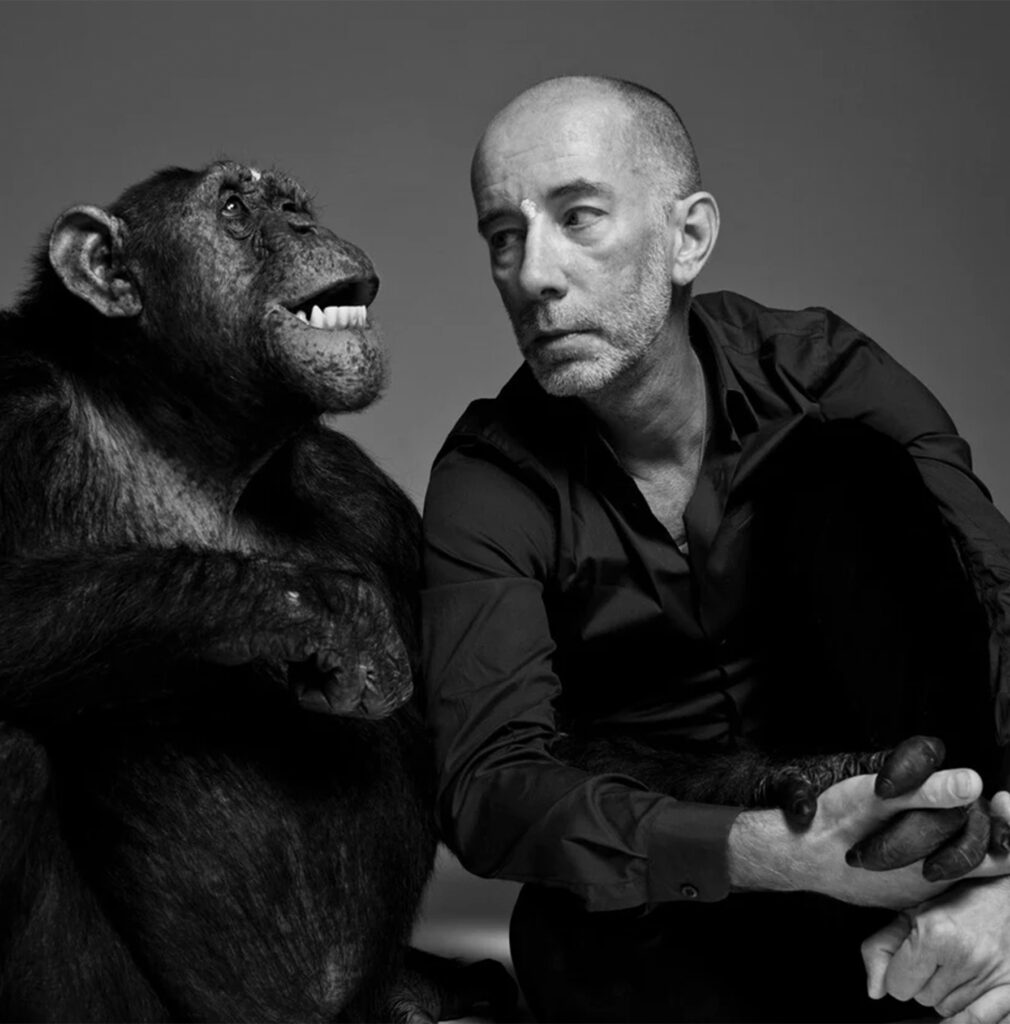
Carsten Höller is a contemporary artist renowned for blending scientific methodology with immersive, participatory installations. Born in Brussels in 1961 to German parents, Höller’s career began in the natural sciences rather than the fine arts. He earned a doctorate in agricultural science from the University of Kiel in 1988, specializing in insect olfactory communication. It was not until the early 1990s that he transitioned fully into art, a background that continues to inform his work as he treats the gallery space as a "laboratory of doubt" where human perception and behavior are the primary subjects of study.
Höller’s artistic practice is characterized by large-scale sculptures and environments that invite direct audience interaction. He is perhaps best known for his massive tubular slides, such as Test Site (2006) at Tate Modern’s Turbine Hall, which frame the act of sliding as both a visual spectacle and a unique internal sensory experience. His work frequently incorporates elements designed to induce states of uncertainty, disorientation, or delight, including upside-down goggles, spinning carousels, and oversized sculptures of psychotropic mushrooms. By repurposing structures typically found in amusement parks or laboratories, Höller prompts viewers to reconsider their relationship with their environment and their own cognitive processes.
Carsten Höller is a contemporary artist renowned for blending scientific methodology with immersive, participatory installations. Born in Brussels in 1961 to German parents, Höller’s career began in the natural sciences rather than the fine arts. He earned a doctorate in agricultural science from the University of Kiel in 1988, specializing in insect olfactory communication. It was not until the early 1990s that he transitioned fully into art, a background that continues to inform his work as he treats the gallery space as a "laboratory of doubt" where human perception and behavior are the primary subjects of study.
Höller’s artistic practice is characterized by large-scale sculptures and environments that invite direct audience interaction. He is perhaps best known for his massive tubular slides, such as Test Site (2006) at Tate Modern’s Turbine Hall, which frame the act of sliding as both a visual spectacle and a unique internal sensory experience. His work frequently incorporates elements designed to induce states of uncertainty, disorientation, or delight, including upside-down goggles, spinning carousels, and oversized sculptures of psychotropic mushrooms. By repurposing structures typically found in amusement parks or laboratories, Höller prompts viewers to reconsider their relationship with their environment and their own cognitive processes.
Currently, Höller lives and works across Stockholm, Sweden; Biriwa, Ghana; and Tuscany, Italy. His influence extends beyond traditional installations into experimental ventures, such as Brutalisten, a restaurant in Stockholm founded on a "brutalist" culinary philosophy where dishes consist of only a single ingredient. His work has been exhibited at major institutions globally, including the Guggenheim Museum, the Hayward Gallery, and the Venice Biennale, cementing his role as a leading figure in relational aesthetics and experiential art.
CARSTEN HÖLLER
Carsten Höller is a contemporary artist renowned for blending scientific methodology with immersive, participatory installations. Born in Brussels in 1961 to German parents, Höller’s career began in the natural sciences rather...
Carsten Höller is a contemporary artist renowned for blending scientific methodology with immersive, participatory installations. Born in Brussels in 1961 to German parents, Höller’s career began in the natural sciences rather than the fine arts. He earned a doctorate in agricultural science from the University of Kiel in 1988, specializing in insect olfactory communication. It was not until the early 1990s that he transitioned fully into art, a background that continues to inform his work as he treats the gallery space as a "laboratory of doubt" where human perception and behavior are the primary subjects of study.
Höller’s artistic practice is characterized by large-scale sculptures and environments that invite direct audience interaction. He is perhaps best known for his massive tubular slides, such as Test Site (2006) at Tate Modern’s Turbine Hall, which frame the act of sliding as both a visual spectacle and a unique internal sensory experience. His work frequently incorporates elements designed to induce states of uncertainty, disorientation, or delight, including upside-down goggles, spinning carousels, and oversized sculptures of psychotropic mushrooms. By repurposing structures typically found in amusement parks or laboratories, Höller prompts viewers to reconsider their relationship with their environment and their own cognitive processes.
Currently, Höller lives and works across Stockholm, Sweden; Biriwa, Ghana; and Tuscany, Italy. His influence extends beyond traditional installations into experimental ventures, such as Brutalisten, a restaurant in Stockholm founded on a "brutalist" culinary philosophy where dishes consist of only a single ingredient. His work has been exhibited at major institutions globally, including the Guggenheim Museum, the Hayward Gallery, and the Venice Biennale, cementing his role as a leading figure in relational aesthetics and experiential art.
CARSTEN HÖLLER
Carsten Höller is a contemporary artist renowned for blending scientific methodology with immersive, participatory installations. Born in Brussels in 1961 to German parents, Höller’s career began in the natural sciences rather than the fine arts. He earned a doctorate in agricultural science from the University of Kiel in 1988, specializing in insect olfactory communication. It was not until the early 1990s that he transitioned fully into art, a background that continues to inform his work as he treats the gallery space as a “laboratory of doubt” where human perception and behavior are the primary subjects of study.
Höller’s artistic practice is characterized by large-scale sculptures and environments that invite direct audience interaction. He is perhaps best known for his massive tubular slides, such as Test Site (2006) at Tate Modern’s Turbine Hall, which frame the act of sliding as both a visual spectacle and a unique internal sensory experience. His work frequently incorporates elements designed to induce states of uncertainty, disorientation, or delight, including upside-down goggles, spinning carousels, and oversized sculptures of psychotropic mushrooms. By repurposing structures typically found in amusement parks or laboratories, Höller prompts viewers to reconsider their relationship with their environment and their own cognitive processes.
Currently, Höller lives and works across Stockholm, Sweden; Biriwa, Ghana; and Tuscany, Italy. His influence extends beyond traditional installations into experimental ventures, such as Brutalisten, a restaurant in Stockholm founded on a “brutalist” culinary philosophy where dishes consist of only a single ingredient. His work has been exhibited at major institutions globally, including the Guggenheim Museum, the Hayward Gallery, and the Venice Biennale, cementing his role as a leading figure in relational aesthetics and experiential art.
ARTWORK
ARTWORK
ARTWORK